

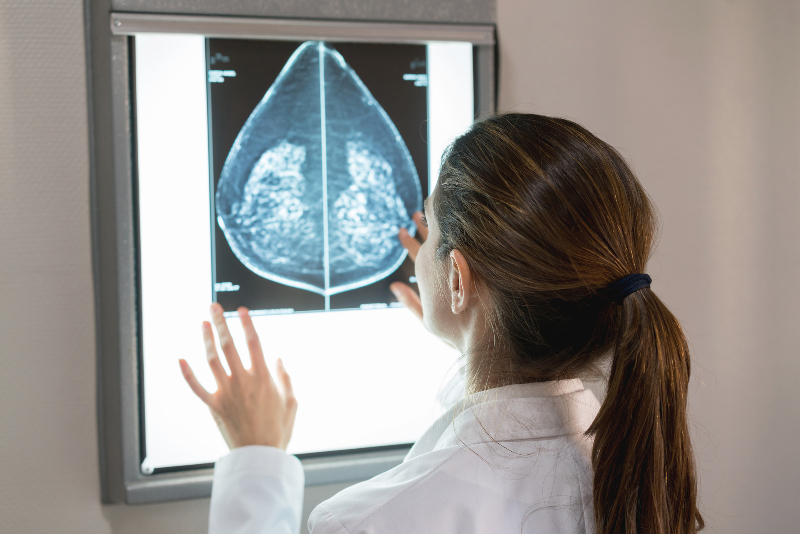
Almost half of all women who get mammograms are found to have dense breasts, and many don’t know what it means. Yolanda Tammaro, M.D., at Ocean Medical Center, explains all you need to know.
Understanding Dense Breast Tissue
Breast density describes the different kinds of tissue that show on your mammogram. Your breasts are made of fat, connective tissue, and milk ducts and lobules that together are called glandular tissue. Dense breasts have higher amounts of glandular and connective tissue and lower amounts of fatty tissue. Breast density matters because women with dense breasts have a higher risk for breast cancer than women with fatty breasts.
The radiologist who reviews your mammogram classifies your breasts according to these four groups:
- Almost entirely fat (about 10 percent of women)
- Some dense areas: scattered areas of dense glandular and connective tissue (about 40 percent of women)
- Many dense areas: numerous areas of glandular and connective tissue (about 40 percent of women)
- Extremely dense: almost all glandular and connective tissue and little fat (about 10 percent of women)
Dense breasts fall into groups 3 and 4. Dense areas appear white on a mammogram, the same color as cancer, making it tricky for doctors to read the images and find breast cancer.
Breast Self-Exams: What to Watch for
The American Cancer Society and the United States Preventive Services Task Force suggest paying attention to how your breasts look and feel, and contacting your health care provider if you notice any changes.
Tell your doctor if you notice or feel any of these changes:
- Breast skin that dimples, puckers or bulges
- Breast or nipple swelling, redness or rash
- Change in the size or shape of your breast
- Changes in your nipple, such as pushing inward instead of sticking out
- Fluid coming out of one or both nipples that’s watery, milky, yellow in color or bloody
- A lump or hard knot inside your breast or armpit
- An area that feels thick inside your breast or armpit
- Pain in one spot of your breast that doesn’t go away
- Any change that occurs in one breast that feels different from the other breast
Factors Affecting Breast Density
Experts aren’t sure why having dense breasts increases your risk for cancer. Typically, breast density is inherited, but other factors can influence it. You may have higher breast density if you’ve used postmenopausal hormone replacement therapy or are underweight for your height. You are more likely to have lower breast density if you are older, if you have had children or if you have taken a breast cancer prevention drug called tamoxifen.
Next Steps & Resources:
- Meet our clinical contributors: Yolanda Tammaro, M.D.
- To make an appointment with one of the doctors above, or a doctor near you, call 800-822-8905 or visit our website.
- Learn more about breast cancer screening at Hackensack Meridian Health.
Find a doctor near me

Quitting Smoking is Key – Here’s How to Do It
Quit smoking now. Learn effective strategies and support to help you succeed. Improve your health and well-being. Get started today!

Five Tips for a Healthier Workout
Three of our cardiologists share how to fit heart healthy exercise into even the busiest schedules.

Which Breast Cancer Screening Technology is Right For You?
Breast cancer is more treatable than ever, but misconceptions can lead women to delay testing necessary to catch it in its earliest phases.

3 Myths About Breast Cancer, Debunked
Debunk breast cancer myths. Dr. Tammaro dispels common fears and offers advice for reducing risk. Learn more & schedule an appointment.