

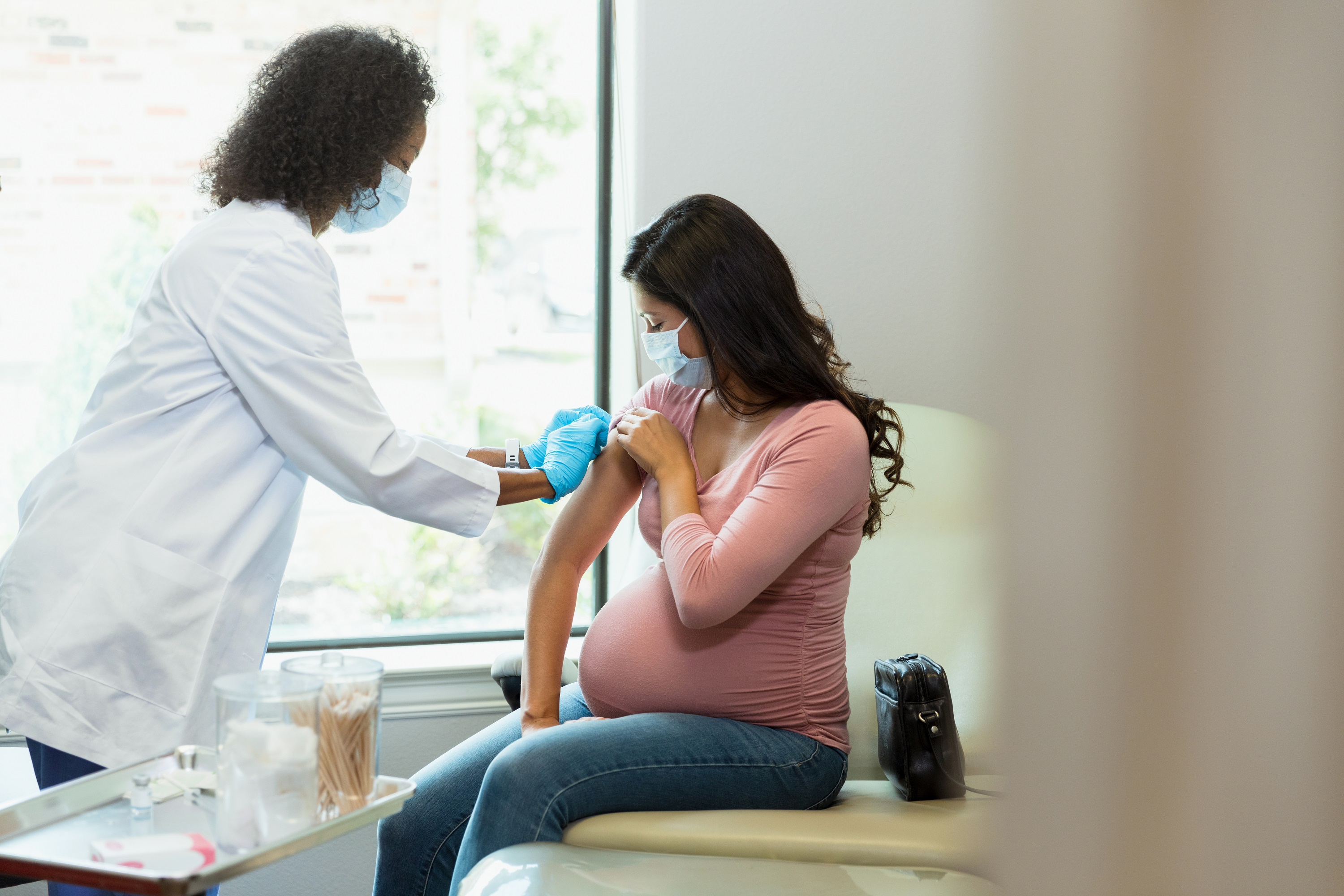
Being pregnant comes with a lot of decisions to make - from picking out baby names to deciding where you’ll deliver, you have to make a lot of important choices.
As we continue to live through the COVID-19 pandemic, you may be thinking, should I get vaccinated if I’m pregnant?
Here are five reasons why it is recommended that you get the COVID-19 vaccine while pregnant:
- Being pregnant puts you at greater risk for severe illness from COVID-19. The vaccine is safe and can help.
Those who are pregnant are more likely to get severely ill from COVID-19, compared to those who are not pregnant. The COVID-19 vaccines will protect you from severe illness, hospitalization and death. - Babies can get protection from their mother’s vaccination during pregnancy, preventing severe illness and hospitalization.
Research from the CDC shared that getting fully vaccinated while pregnant can help prevent COVID-19 hospitalization for babies under 6 months of age.
Infants under 6 months are 61% less likely to be hospitalized from COVID if their mother received 2 doses of a mRNA vaccine while pregnant. - Vaccinated mothers can provide antibody protection through breast milk.
A study shared in the Obstetrics & Gynecology journal found that if you are fully vaccinated, your baby can receive COVID-19 antibodies through your breast milk, providing them with passive immunity.
“These studies yield the answers we’ve been looking for - if you get vaccinated while pregnant you can pass on protective antibodies to your baby while in the womb, providing protection once they are born, and breast milk can also carry these protective properties as well. This is all great news for families,” shares maternal fetal medicine specialist, Antonia Francis Oladipo, M.D. - COVID-19 during pregnancy can increase your risk of preterm birth or stillbirth.
Compared to those who don’t have COVID-19, those who have the virus during pregnancy are more likely to experience pregnancy complications, deliver their babies earlier than 37 weeks, or have a stillbirth. Getting vaccinated can lower your risk of infection from COVID-19. - There is currently no vaccine available for those under five years of age. Getting vaccinated will protect you and your family.
COVID-19 vaccines are not approved yet for babies. Children six months to four years old may soon be eligible for vaccination, but as of right now, vaccines are only available to those over the age of five.
The best way to protect yourself, your new baby and your family is to get vaccinated. Getting vaccinated decreases your risk of getting and spreading COVID-19.
“I understand the pressure and anxiety that pregnant women are feeling right now,” shares Dr. Olapido. “When the vaccines first became available it was understandable to be hesitant about getting vaccinated, but the research is there. It’s safe, it’s effective, and it will keep you and your baby from getting severely ill.”
Next Steps & Resources:
- Meet our source: Antonia Francis Oladipo, M.D.
- To make an appointment online with Dr. Oladipo or a doctor near you, or call 800-822-8905.
- CDC - Effectiveness of Maternal Vaccination with mRNA COVID-19 Vaccine During Pregnancy Against COVID-19
- CDC - COVID-19 Vaccines While Pregnant or Breastfeeding
Find a doctor near me
Can You Breastfeed With Implants?
Breastfeeding with Implants? Dr. Kim offers advice on successful breastfeeding, even with implants. Learn how implant location impacts milk supply and get support. Call 800-822-8905.

Questions You Shouldn’t Be Embarrassed To Ask Your OB/GYN
Talking about your private parts is something that you might want to keep, well, private. But let’s face it, ladies, sometimes we may have questions regarding our vaginal health.

Are Itchy Eyes a Sign of COVID-19?
Itchy eyes and COVID-19? Dr. Rosenberg explains if this is a common symptom and offers prevention tips. Learn more and schedule an appointment.
Should I Get My Child Vaccinated?
Child COVID-19 vaccination: Doctors Clouser & Pall explain safety, benefits, and scheduling. Protect your child. Call 800-822-8905.