

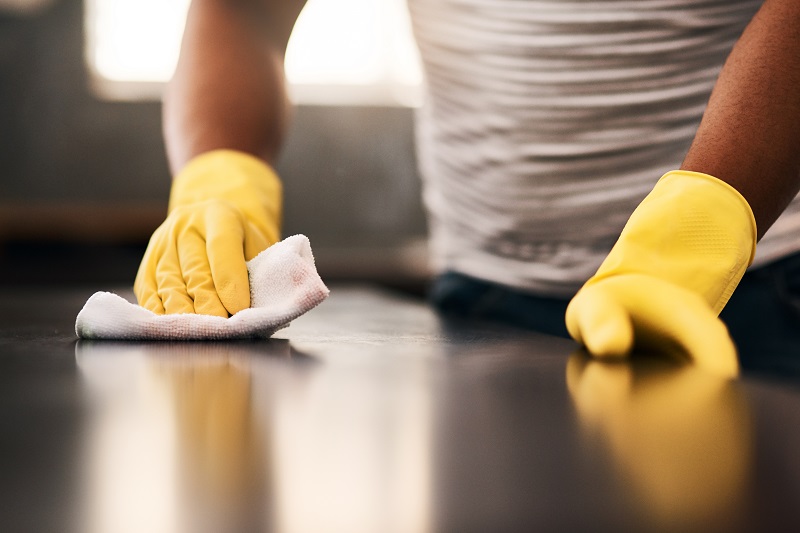
Living through the COVID-19 pandemic, you may be wondering, does monkeypox spread as easily as COVID-19?
Although monkeypox is now on the Center for Disease Control’s (CDC) list of public health emergencies, along with COVID-19 and polio, monkeypox is not typically an airborne virus. Monkeypox infection occurs from direct contact with an infectious rash, scab, saliva or respiratory droplet.
How is monkeypox transmitted? Is there a high risk for spreading via surfaces?
Monkeypox is primarily acquired through close, skin-to-skin contact with the infectious skin lesions or contact with the saliva of an infected individual.
Transmission may occur through direct contact with materials that have been contaminated, such as clothing or linens.
The virus may spread through respiratory secretions but requires prolonged face to face contact with an individual, usually with lesion in their mouth.
Fortunately, the monkeypox virus is rarely found on surfaces, and even if viral particles are found on a surface or object, it is very unlikely to cause an infection.
“While you should always clean high-touch surfaces to eliminate exposure to germs and viruses, monkeypox is primarily spread through prolonged skin to skin contact,” shares Cristina Cicogna, M.D., chief of infectious diseases at Hackensack University Medical Center. “There is some concern around transmission via air droplets, like coughs and sneezes, but the bigger risk is through intimate contact.”
How long can monkeypox live on a surface?
There is no specific timeframe for how long the virus may survive on surfaces, but the CDC shared that one study has shown it can survive as long as 15 days under the optimal circumstances – dark, cool, low-humidity places. This does not mean that the virus is infectious for that time frame.
There are several easy steps you can take to protect yourself and your family from infection from surfaces and objects :
- Clean and sanitize regularly
- Always use personal protective equipment when cleaning the environment close to an infected individual or handling their laundry – disposable gloves, mask and eye protection
- A simple detergent solution (hot water and soap) works well, and should be followed by applying bleach or another type of sanitizer to the surface
- Common cleaning products containing hydrogen peroxide or ethyl alcohol also work well for hard surfaces such as furniture and countertops
- For more porous objects such as bed sheets, linens and clothing, wash them by themselves in hot water and laundry detergent
- Do not recycle your PPE after use – put them in the trash immediately
- Always wash and sanitize your hands after cleaning or handling infected objects
“Even if the monkeypox virus is found on a surface like a counter, or a doorknob, the virus is not as transmissible through these means,” adds Dr. Cicogna. “Wash your hands and keep up the safety precautions we’ve already become accustomed to with COVID-19, like not sharing drinks and personal items.”
Sexual contact is biggest spreader, adds Dr. Cicogna. “If you have multiple sexual partners, regardless of your sexual orientation or gender identity, monkeypox is something you should be aware of taking precautions for.”
Next Steps & Resources:
- Meet our source: Cristina Cicogna, M.D.
- Make an appointment online with an infectious disease specialist near you, or call 800-822-8905.
- To get evaluated for Monkeypox, visit an urgent care near you.
Find a doctor near me

Is COVID Brain Fog Permanent?
Is COVID Brain Fog Permanent? Learn about Long COVID brain fog from Dr. Fleming, and discover recovery resources & support at JFK Johnson Rehabilitation Institute. Get help today.
Understanding the New “Omicron” Boosters: Do I Need One?
New COVID-19 boosters are available that target the Omicron variant. Learn more about how the vaccine works, and who should get one.
What to Know About COVID-19 and Shingles
COVID-19 and Shingles: Learn how COVID-19 increases your shingles risk. Dr. Liu explains prevention and vaccination. Schedule an appointment today.
Can COVID-19 Cause Migraines?
COVID-19 may worsen migraines. Learn how Dr. Pellmar offers migraine relief and treatment options. Call 800-822-8905 for an appointment.