

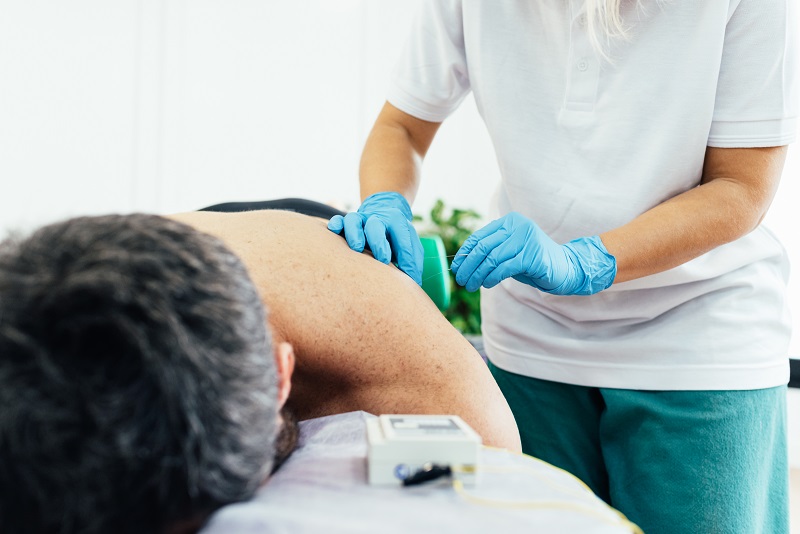
Dry needling and cupping seems to be popular among professional athletes and celebrities, and you may have even caught the trend in your own social media feed. But exactly what are these therapy techniques, and are they safe?
What Is Cupping?
Cupping dates back more than 2,000 years, with origins in Ancient Egypt, China and Middle Eastern civilizations as a form of integrative medicine. Cupping is a noninvasive treatment that uses special cups made of glass or medical-grade plastic to create suction on the skin.
The suction—also referred to as negative pressure—is intended to relieve tension and pressure within the skin, fascia, muscle and connective tissue. “This process helps increase circulation, promotes muscle relaxation, healing and enhanced range of motion, which can provide significant relief,” says Roger Rossi, D.O., a specialist in physical medicine and rehabilitation.
Cupping can be used to treat:
- Migraines
- Muscle pain
- Fibromyalgia
- Poor circulation
- Stagnant blood flow
- Allergies
- Fevers
- Neck pain
- Carpal tunnel syndrome
- Anxiety
- Osteoarthritis
Is Cupping Safe?
When done by a professional, cupping is safe—although it can cause temporary bruising that can last up to a week or two. “Your health care provider will create a treatment plan based on your personal needs, desired outcome and your body’s responsiveness to the treatment,” says Dr. Rossi.
What Is Dry Needling?
Dry needling is another ancient practice. It involves inserting needles into the body’s soft tissues to stimulate muscle contraction and activation to promote healing and rejuvenation in and around an area of trauma or discomfort. “This microscopic, targeted treatment is meant to jump-start the body’s reparative responses within the targeted tissue,” says Dr. Rossi.
The purpose of dry needling is to:
- Increase blood flow
- Promote healing
- Relax muscles
- Reduce pain
- Increase range of motion and reduce muscle spasm
Is Dry Needling Safe?
When performed by a trained medical professional, dry needling is safe. Needles are sterile and single use. The practice of dry needling is commonly and widely used in the treatment of acute and chronic injury, and often used for athletic recovery.
“Although these practices seem straight-forward, and you can easily find supplies on the internet, it is best to visit a qualified professional to ensure accurate placement. Doing so will increase the likelihood of a positive therapeutic response and ensure the correct area has been stimulated,” says Dr. Rossi. “Dry needling should only be administered by an experienced health care provider, if done improperly, you can experience bleeding, pain or even organ puncture.”
What Is the Difference Between Dry Needling and Cupping?
While cupping breaks up and relieves tension within the connective tissues, dry needling and needle stimulation directly activates or inhibits muscle tissue. A trained professional can help you better understand which complementary method is best for you and support your holistic approach to healing.
Next Steps & Resources:
- Meet our source: Roger Rossi, D.O., Medical Director of St. Joseph's Wayne Medical Center Acute Rehabilitation Unit in Wayne, NJ, affiliated with Hackensack Meridian Johnson Rehabilitation Institute
- To make an appointment with a health care provider near you, call 800-822-8905 or visit our website.
Find a doctor near me
Are Massage Guns Good for You? A PT Explains
Learn if massage guns benefit you. A physical therapist explains proper use, benefits, and when to avoid them. Schedule an appointment today.

Can an Anti-Inflammatory Diet Help Relieve Pain?
Reduce pain with an anti-inflammatory diet. Registered dietitian Katlyn Cusack offers expert advice and resources. Call 800-822-8905 for help.

How to Meditate During a Busy Day
Learn to meditate daily. Reduce stress, improve sleep, and manage anxiety. Tips and guided meditations included. Call 800-822-8905.

How to Talk to Your Partner About STD Testing
Learn how to discuss STD testing with your partner. Dr. Raoof offers advice for open communication & protecting your health. Get tested today.