


E-cigarettes have skyrocketed in popularity over the last few years, particularly with teens and young adults, partially due to the belief that they are a safe alternative to conventional cigarettes.
Technically, e-cigarettes are less harmful than regular cigarettes, according to the Centers for Disease Control and Prevention, but they’re far from safe. What exactly are e-cigarettes, and what makes them dangerous?
How Do E-Cigarettes Work?
E-cigarettes come in a variety of shapes and sizes. Some are made to look like regular cigarettes, while others resemble pens or USB sticks.
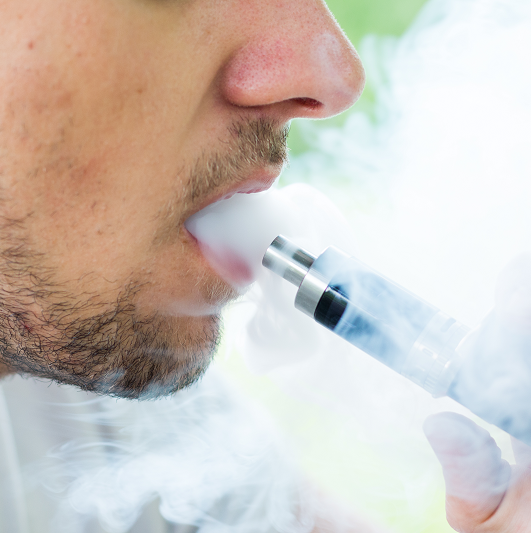
E-cigarettes work by using a battery to heat up a liquid called “e-juice,” which usually contains nicotine, flavorings and other chemicals. This liquid becomes an aerosol that users inhale. While using an e-cigarette is referred to as “vaping,” they do not create harmless water vapor. “The liquid contains numerous chemicals, and when the liquid is heated, even more toxic chemicals are formed,” says pediatric pulmonologist, Nader Nakhleh, D.O.
What Toxic Chemicals and Materials Are in E-Cigarettes?
To date, the Food and Drug Administration (FDA) has not issued standards on e-cigarette products, so composition and effects can vary from brand to brand. But according to the American Lung Association, researchers have found toxic chemicals and materials in e-cigarettes such as:
- Nicotine: “This is a highly addictive substance that can have negative effects on teen brain development and is partly what makes e-cigarette usage in teens so dangerous,” says Dr. Nakhleh. While e-cigarettes do not contain actual tobacco, they contain nicotine that is extracted from tobacco. Studies have found that even e-cigarettes that claim to be nicotine-free have trace amounts.
- Carcinogens: These are chemicals, such as formaldehyde, known to cause cancer.
- Acrolein: This is an herbicide used to kill weeds that can cause lung damage.
- Diethylene glycol: This toxic chemical is used in antifreeze and is linked to lung disease.
- Heavy metals such as nickel and lead: These metals have been linked to chronic obstructive lung disease, pulmonary fibrosis and lung cancer.
Can E-Cigarettes Cause Secondhand Smoke?
Although e-cigarettes don’t give off smoke like regular cigarettes, they do expose people to secondhand aerosols that may contain toxic substances. “Scientists are still studying the health effects of e-cigarette use over long periods of time as well as the effects of secondhand exposure,” says Dr. Nakhleh.
Can E-Cigarettes Help People Stop Smoking?
Currently, e-cigarettes are not approved by the FDA as aids to stop smoking. A recent study found that many adults were using e-cigarettes in an attempt to quit smoking cigarettes. However, most do not stop regular cigarettes and use both products. This dual use is not effective in quitting or in safeguarding health.
“Despite e-cigarettes being less harmful than regular cigarettes, they pose a serious health risk—not only because they contain dangerous toxic substances but also because of the false perception of safety when compared to regular tobacco products,” says Dr. Nakhleh
Next Steps & Resources:
- Meet our source: Nader Nakhleh, D.O.
- To make an appointment with a primary care doctor near you, call 800-822-8905 or visit our website
Find a doctor near me

What Happens to Your Lungs When You Vape?
Learn vaping's lung effects. Doctors Hanhan and Rizk explain risks and symptoms. Protect your health; get information and resources now.

What Happens to Your Body After You Quit?
It isn't difficult to rattle off numerous reasons why quitting smoking is the most important health decision you will ever make.
If You Smoke or Vape, COVID-19 Is Another Reason To Quit
Because COVID-19 attacks the lungs, those who vape or smoke are at a greater risk for severe illness.

Blood Oxygen Levels: What’s All the Hype About?
Understand blood oxygen levels. Dr. Pristas explains normal levels, when to be concerned, and pulse oximeter use. Learn more & schedule an appointment.