


It’s a misconception that heart attack and cardiac arrest are the same condition. While they have similarities—they’re both related to heart health and considered emergency situations—it’s important to understand the differences between them.
“Knowing the differences is key to quick action in the event of either condition,” says Ihab Girgis, M.D., medical director of the Cardiac Electrophysiology Laboratory at Jersey Shore University Medical Center. “And quick action is vital to a positive outcome. It often can mean the difference between life and death.”
What Is Cardiac Arrest?
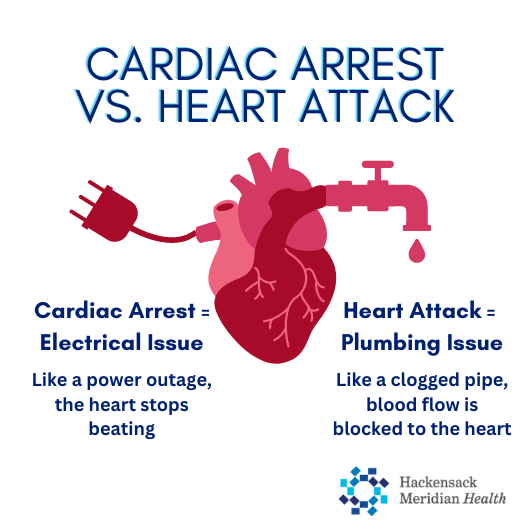
Cardiac arrest is a sudden loss of heart function in a person with or without heart disease. “With cardiac arrest, your heart comes to a functional stop due to electrical disorganization and no longer pumps blood,” says Dr. Girgis. “This quickly puts your organs at risk of failure and you at risk of death.”
Signs of cardiac arrest:
- Fainting or loss of consciousness
- Dizziness or lightheadedness just prior to loss of consciousness
- Shortness of breath just prior to loss of consciousness
- Quick heart beat just prior to loss of consciousness
- Chest pain just prior to loss of consciousness
If you suspect cardiac arrest, call 911 immediately. If possible, CPR and/or defibrillation should be administered right away.
What Is a Heart Attack?
A heart attack is caused by a blockage that stops blood flow to the heart. It can sometimes lead to cardiac arrest, but the two conditions are not the same.
Signs of a heart attack:
- Chest pain, tightness and pressure
- Pain or discomfort radiating to the arm, neck, jaw or teeth
- Pain in the back or belly
- Sweating
- Nausea or vomiting
- Shortness of breath
- Lightheadedness
If you suspect a heart attack, call 911 right away.
Why CPR Is Key
CPR—or cardiopulmonary resuscitation—uses chest compressions that help keep blood flowing throughout the body to mimic how the heart pumps. In the case of cardiac arrest, this emergency procedure is vital to survival.
“Without oxygen delivery by a pumping heart, cardiac arrest can lead to death in minutes. But with CPR, compressions can keep the blood flowing throughout the body until the person can get more advanced care,” says Dr. Girgis.
Most instances of cardiac arrest occur outside of the hospital. That’s why CPR is a skill that most individuals should challenge themselves to master. If a trained bystander administers CPR within the first few minutes of cardiac arrest, they can double or triple the victim’s chance of survival.
“Everyone should know basic life support because it can be needed at any time,” Dr. Girgis says. “You’ll be ready to jump into action anytime you're around someone who collapses.”
Next Steps & Resources:
- Meet our source: Ihab Girgis, M.D.
- Make an appointment online with a cardiologist near you, or call 800-822-8905.
Find a doctor near me
Heart Failure: What it Looks Like & How to Help
Understand heart failure symptoms? Dr. Almendral explains what to watch for & how to get help. Learn more and find treatment options.
How Doctors Treat Clogged Arteries Without Surgery
Once arteries become clogged, there’s no quick solution to resolve it. Fortunately, there are alternatives less invasive than bypass surgery.

What Is Broken Heart Syndrome?
Understand broken heart syndrome? Learn about causes, symptoms, and diagnosis from Jersey Shore University Medical Center's Dr. Saybolt. Call 800-822-8905.
Non-Alcohol Related Liver Disease Ups Heart Disease Risk
One in four adults has a silent liver disorder that harms the heart. Here’s what you should know.