

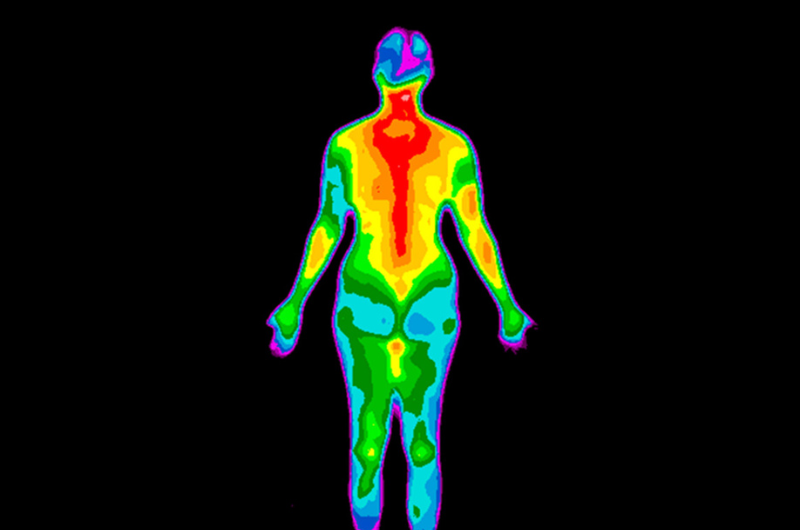
Lately, many people are talking about thermography for breast cancer screening, claiming that it’s a safer option than mammography. Our expert radiologists help break down how thermography works, address safety concerns around mammography, and clarify the most effective option for catching breast cancer early.
How Thermography Works
Thermography uses infrared technology to detect heat patterns on the surface of the breast. This can indicate inflammation or other abnormalities.
Unlike mammograms, thermography does not involve uncomfortable breast compression. However, if thermography finds an abnormal area, “a mammogram is always recommended to reinforce any thermogram finding, whether negative or positive,” says Harriet Borofsky, M.D., medical director of breast imaging at Riverview Medical Center and Bayshore Medical Center.
“In my 30 years of practice, I’ve never seen a thermogram detect a single case of breast cancer,” Dr. Borofsky adds. “Since it uses infrared light, a tumor would have to be very large to emit the significant temperature changes that a thermogram would notice.”
The FDA has explicitly stated that thermography should never be used as a substitute screening tool for mammography to detect breast cancer.
How Mammography Works
Only mammograms are effective for detecting small, early breast cancers.
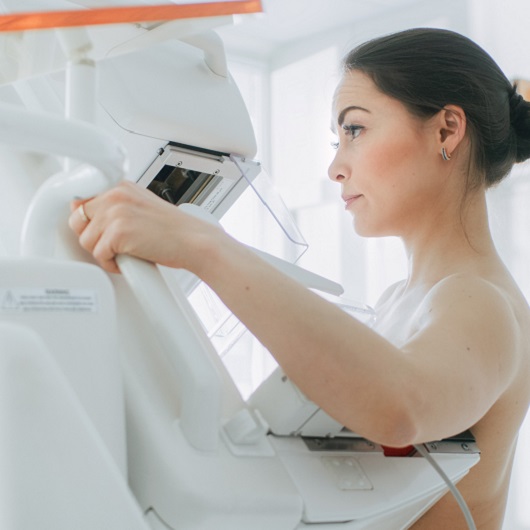
Mammography uses X-ray technology to capture images of the breast from two angles—from the top and from the side. The breast is compressed between two “paddles” to get clear images. A radiologist examines these images to identify any abnormal areas. If something suspicious is found, further tests like ultrasound or MRI may be needed.
Are Mammograms Safe?
Mammograms are essential and safe for breast cancer screening. Although they deliver a dose of radiation, the amount emitted during a mammogram is so tiny, it’s considered negligible.
“A flight from the East to West Coast exposes us to a similar amount of radiation,” says Gail Starr, M.D., MSEd, chief of breast imaging, diagnostic radiology, at Hackensack University Medical Center and Palisades Medical Center. “Radiation is a scary word for many people, but the dose of radiation from a mammogram is exceedingly low.”
Pros and Cons of Mammography and Thermography
Mammograms and thermograms each come with benefits and drawbacks.
Mammography pros include:
- It’s proven to detect breast cancer at early stages. “Mammography is considered the gold standard,” Dr. Starr says. “Over many years, it’s been proven to save lives and give patients many more treatment options when breast cancer is detected early.”
- It reduces breast cancer mortality by 30-40%
- It’s generally covered by health insurance
Mammography cons include:
- It involves low-dose radiation
- It may cause discomfort due to breast compression
Thermography pros include:
- No radiation exposure
- No breast compression
Thermography cons include:
- There is no scientific evidence supporting early cancer detection
- It’s not covered by health insurance
- It’s less effective compared to mammography
“I tell patients to save their money – there’s no good reason to have a thermogram,” Dr. Borofsky says.
“The FDA has cleared thermography as an ‘adjunct’ tool to use alongside a primary screening test like mammography, but there are many superior adjunct tools such as ultrasound, MRI, and contrast-enhanced mammography,” Dr. Starr says. “While some patients may turn to thermography because it seems like a better option, it’s not. It’s safe but not effective.”
Tips for a More Comfortable Mammogram
- If you have sensitive breasts, take an over-the-counter pain reliever, such as (acetaminophen) Tylenol or ibuprofen (Advil) before your appointment.
- Schedule your mammogram for the first week of your menstrual cycle, when breasts are typically less tender.
- Tell your mammography technician if you’re experiencing discomfort during the test. She may be able to reposition your breasts to make the process more comfortable.
Next Steps & Resources:
- Meet our sources: Gail Starr, M.D., MSEd, Harriet Borofsky, M.D.
- Book your mammogram online.
- Learn more about women’s health and mammography at Hackensack Meridian Health.
Find a doctor near me

Are Mammograms Painful?
Mammogram pain? Learn what to expect & how to minimize discomfort. Doctors Starr and Won share advice. Schedule your mammogram today.

7 Tips to Prepare for Your First Mammogram
Prepare for your first mammogram with Dr. Chuang's 7 tips. Learn how to ease anxiety and ensure a smooth experience at Mountainside Medical Center. Schedule now.
What to Do When You Find a Breast Lump
Discover breast lump next steps. Dr. Tammaro explains what to do: see your doctor for diagnosis and treatment options. Schedule your appointment today.
When Should You Start Getting a Mammogram? Experts Say at 40
The U.S. Preventive Services Task Force recently updated their recommendations that women should begin regular mammogram screenings at age 40, instead of 50. Our expert explains why and how to protect yourself from breast cancer.