

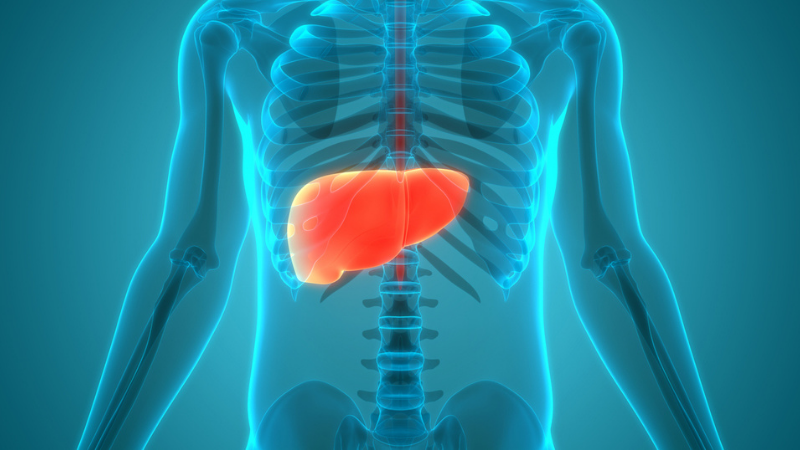
If you or a loved one has been diagnosed with a liver tumor, you may have heard that surgery or other invasive treatments are the only option.
But a newer approach called histotripsy treatment is changing that. And Hackensack Meridian Health is one of only three centers in New Jersey to offer it.
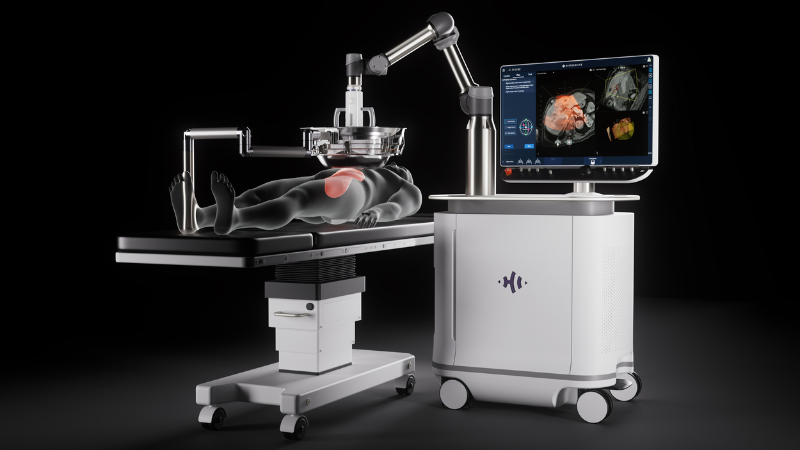
Histotripsy is an entirely noninvasive, ultrasound-based therapy that uses focused sound waves to destroy liver tumors, with no incisions, no needles and no radiation.
“It’s one of the more fascinating medical technologies I’ve seen in a very long time,” says Gregory Tiesi, M.D., FACS, FSSO, chief of surgical oncology andmedical director of Hepatobiliary Surgery at Jersey Shore University Medical Center.
How Does Histotripsy Treatment Work?
The histotripsy device uses ultrasound waves to target tumors. This creates tiny bubbles that expand and collapse (a process known as acoustic cavitation), generating a mechanical force that destroys and liquifies the tumor tissue, says Dr. Tiesi. The body then naturally reabsorbs some of the liquid and the lymphatic system flushes out the rest without risk of the tumor spreading.
The treatment is so thorough that no trace of the cancer cells is left behind. “If you were to give a tissue sample to a pathologist, they wouldn’t know what it is or where it came from … the tissue is so well-destroyed,” says Dr. Tiesi.
The outpatient procedure typically takes one to two hours, though it may take longer for larger or multiple tumors. Most patients go home the same day, and the procedure can be repeated as needed.
What Are the Benefits of Histotripsy Treatment?
Many people with liver tumors aren’t candidates for surgery because of their age, their overall health and/or the location or number of their tumors. Other options, like thermal ablation (where the tumor is heated and destroyed), require needles and there is risk of damaging nearby blood vessels, bile ducts or the gallbladder.
Histotripsy offers a noninvasive alternative. One of its biggest advantages is its ability to treat tumors located near critical structures without harming them, something that often isn’t possible with other treatments, says Dr. Tiesi.
Here are some other key benefits of histotripsy:
- It can treat primary liver cancers, metastatic tumors and even certain benign growths.
- It can be combined with chemotherapy or immunotherapy without having to pause these other treatments.
- The side effects are generally mild (some fatigue or discomfort), and the complication rate is very low compared to that of surgery orother invasive techniques.
How Effective Is Histotripsy Treatment?
In a 2024 clinical trial, histotripsy achieved a “technical success rate” of 95 percent, meaning it successfully destroyed the targeted tumor tissue in a vast majority of the trial patients.
However, long-term outcomes remain uncertain, and it’s not yet clear how histotripsy stacks up against established approaches such as surgery or thermal ablation. But Dr. Tiesi is optimistic.
“It’s hard for me to imagine that completely mechanically destroying the tumor through histotripsy will be inferior to other treatments,” he says.
Histotripsy is also currently being studied for use in kidney, pancreas and thyroid tumors, which could expand its reach significantly in the coming years.
How Is Histotripsy Changing Patient Care?
For Dr. Tiesi, histotripsy’s biggest impact is giving options to patients who didn’t have them before.
“I really do believe there will be a paradigm shift using histotripsy in how we approach many solid organ cancers,” he says. “We may be doing far less surgery in the future because of this advancement.”
Next Steps & Resources:
- Meet our source: Gregory J. Tiesi, M.D., FACS, FSSO
- Make an appointment online with a cancer care provider near you, or call 800-822-8905.
- Learn more about our cancer care services.
Find a doctor near me

Facing Cancer With a Positive Attitude
Facing Cancer? Find support and coping strategies to maintain a positive attitude during treatment. Learn from Dr. Abo and Dr. Lewis. Read now.

How to Form Your Cancer Care Team
Build your cancer care team. Learn about oncologists, surgeons, nurse navigators, and more. Get support and guidance for your journey.

What Are Cancer Vaccines?
Learn about cancer vaccines from leading experts. Discover preventative and treatment options. Schedule an appointment today.

Why Cancer is on the Rise in Young People
Rising Cancer Rates in Young Adults: Learn about contributing factors & proactive steps to protect your health. Find a primary care doctor today.