

When certain cancers — including ovarian, colon and stomach cancer — spread, they sometimes reach the peritoneum, which is the lining that surrounds your abdominal cavity. This causes peritoneal carcinomatosis, a type of cancer that’s usually difficult to treat.
But a new therapy, called pressurized intraperitoneal aerosol chemotherapy (PIPAC), is starting to change that. And Hackensack Meridian Health is one of the only medical centers in the country that offers it.
Here’s what you need to know about the groundbreaking treatment that could potentially extend your life.
What Is PIPAC — and How Does the Procedure Work?
Peritoneal carcinomatosis typically doesn’t respond well to standard chemotherapy. PIPAC is an aerosol-based treatment that delivers chemotherapy directly into your abdominal cavity.
With this more targeted approach, a small, pressurized pump turns liquid chemotherapy into a fine spray, allowing it to reach areas that are often difficult to treat with traditional methods, explains Eric Pletcher, M.D., a surgical oncologist at Hackensack Meridian’s JFK University Medical Center in Edison, New Jersey.
The minimally invasive procedure typically takes one or two hours, and most patients go home the same day. Depending on how advanced the disease is, the treatment can be repeated every six to eight weeks and for up to three cycles.
It’s important to know that PIPAC is a palliative therapy. That means it can help manage and stabilize the disease and extend your life, but it’s not a cure.
“Our goal is to buy time,” Dr. Pletcher says.
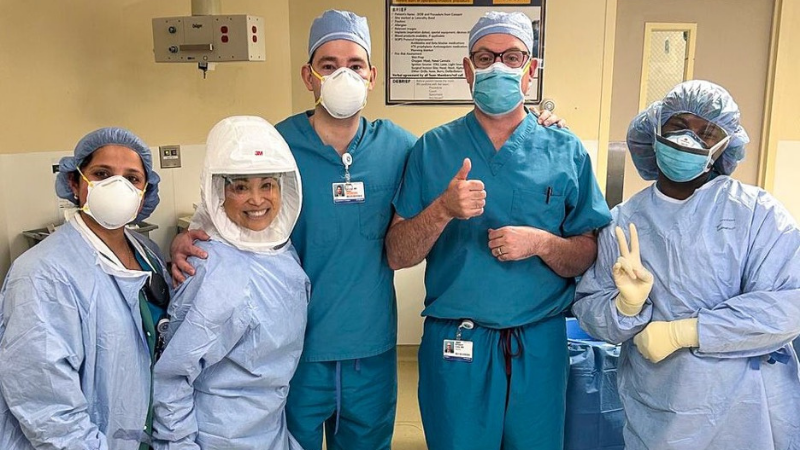
The team at JFK University Medical Center after completing the state's first PIPAC procedure to treat hard-to-access cancer in the abdominal cavity.
What Are the Benefits of PIPAC?
In addition to being a more targeted treatment option, PIPAC can also reduce the amount of cancer in your abdominal cavity enough that you may become a candidate for cytoreductive surgery. This procedure removes remaining cancer cells for longer-term disease control.
PIPAC can also help with a painful complication called malignant ascites, where fluid containing cancer cells builds up in the abdomen. By reducing that fluid, PIPAC can ease symptoms such as abdominal discomfort, nausea and loss of appetite, which can make other treatments more tolerable, says Dr. Pletcher.
How Is the PIPAC Procedure Making a Difference for Patients and Doctors?
For many people with peritoneal carcinomatosis, PIPAC is the first real treatment option available. It offers them a solution that has the potential to improve quality of life and extend survival, says Dr. Pletcher.
Clinical trials have shown that about 50% to 75% of colon, rectal or ovarian patients treated with PIPAC see their disease stabilize, meaning that it stops getting worse.
There’s another benefit: Because PIPAC delivers chemo directly to the abdomen, it tends to cause fewer side effects and lower toxicity compared to systemic chemotherapy, says Dr. Pletcher. That means less nausea, less fatigue and a better quality of life during treatment. (That being said, PIPAC can be done in conjunction with traditional chemotherapy, if that’s what your doctor determines is best.)
For doctors like Dr. Pletcher, PIPAC is changing the quality of care they can provide to patients who may otherwise feel like they have reached the end of the road.
“I take pride in taking care of patients who, traditionally, wouldn’t have had additional options,” says Dr. Pletcher.
Next Steps & Resources:
- Meet our source: Eric Pletcher, M.D.
- Make an appointment online with a cancer care provider, or call 800-822-8905.
- Learn more about our cancer care services.
Find a doctor near me
Foods to Reduce Cancer Risk
Reduce your cancer risk. Learn which foods to eat and avoid. Expert advice from Drs. Patel & Leopold and RDN McKenzie. Schedule an appointment today.

Health Screenings Everyone Should Get
Learn about essential health screenings. Dr. Maria Chavez Santos provides guidance. Schedule your appointment today – call 800-822-8905 or visit our website.

Gut Check: Tips for Stomach Pain Relief, Better Digestion and Signs to See Your Doctor
Our expert speaks on how we would know if our stomach problems are serious, and when it's time to get checked out.