


With Parkinson's disease being the fastest-growing neurological disorder in the world, the race to find a treatment that can slow its progression is more urgent than ever. Now, Hackensack Meridian Neuroscience Institute at Hackensack University Medical Center is at the forefront of this effort, participating in a pivotal new clinical trial called PARAISO, which is evaluating a promising new investigational drug called prasinezumab, which has the potential to do more than just manage symptoms - it may actually slow the progression of the disease.
Understanding Parkinson's Disease and Its Rise
Parkinson's disease is a progressive neurodegenerative disorder that primarily affects movement. It is characterized by tremors, slowness of movement, stiffness and difficulties with balance and walking. The disease is caused by the loss of brain cells that produce dopamine, a chemical that helps control movement.
Parkinson's is the world's fastest-growing neurological disorder. The number of people with the disease more than doubled from 1990 to 2015 and is projected to double again by 2040. While age is the most significant risk factor, the rapid increase in cases cannot be explained by an aging population alone.
While most people are diagnosed with Parkinson's in their 60s, it can also affect younger individuals. About 10% to 20% of people with Parkinson's are diagnosed before age 50, a condition known as young-onset Parkinson's disease.
The Importance of the PARAISO Trial
Current treatments for Parkinson's primarily focus on managing symptoms by replacing dopamine, but they do not slow or stop the underlying disease process. The PARAISO trial is investigating a new approach. The trial is a Phase III, randomized, double-blind, placebo-controlled study evaluating the efficacy and safety of monthly infusions of prasinezumab over 2 years. This experimental antibody therapy targets and helps remove clumps of a protein called alpha-synuclein, which are a hallmark of Parkinson's and are believed to be responsible for brain cell death.
Hope on the Horizon
By targeting an early pathological process, researchers hope that prasinezumab can slow down the progression of Parkinson's. The trial will enroll approximately 900 participants with early-stage Parkinson's disease who are on a stable dose of levodopa, the most common medication for the condition. Participants will receive either prasinezumab or a placebo intravenously every four weeks. During the first 2 years of the study, participants are randomly chosen to receive the drug or placebo, but in the optional second 2 years of the study, all participants receive the drug infusion.
"We are excited to participate in a clinical trial that is trying to slow the progression of disease, which is not currently possible with available treatments,” explains Umer Akbar, M.D., Director of the Movement Disorder Center at Hackensack University Medical Center and Professor of Neurology at Hackensack Meridian School of Medicine. “We are testing the effectiveness of medication that can potentially transform how we treat people with Parkinson’s disease.”
While the path to a new approved therapy is lengthy, Dr. Akbar says a trial of this scale and design gives patients and the entire medical community a tangible sense of hope for a future where we can do more than just treat symptoms.
"The PARAISO trial represents a pivotal moment in our fight against Parkinson's disease,” says Florian Thomas, M.D., Ph.D., founding chair & professor, Department of Neurology at Hackensack University Medical Center and at Hackensack Meridian School of Medicine. “This trial offers a tangible sense of hope to our patients and the entire medical community, bringing us closer to a future where we can offer more than just symptomatic relief."
Next Steps & Resources:
- Meet our sources: Umer Akbar, M.D. and Florian Thomas, M.D., Ph.D.
- Make an appointment online with a neurologist near you, or call 800-822-8905.
- For more information on Parkinson’s care at Hackensack Meridian Health, click here.
Find a doctor near me

Is Parkinson’s Disease Hereditary?
Is Parkinson's Hereditary? Learn about genetic factors, risk, and next steps from Dr. Hanna. JFK Medical Center offers resources and support.
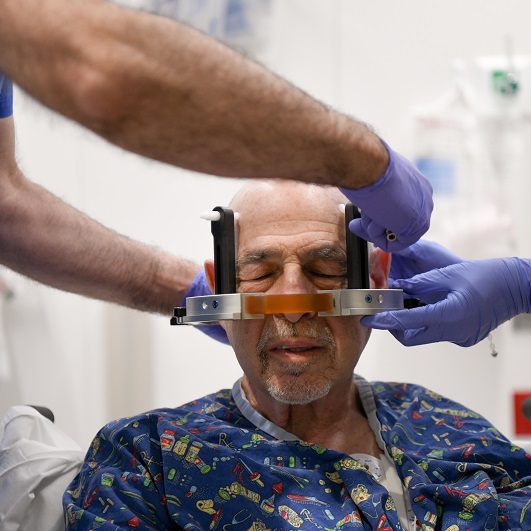
Innovative Technologies for Movement Disorders
Learn about innovative, new technologies for diagnosing and treating patients with Parkinson’s disease.

Parkinson’s Disease: Exercising Through the Stages
Exercise can benefit patients with Parkinson’s at any stage of the disease. Our expert explains why exercise is so important for people with Parkinson’s, and what type of exercise is helpful for people with early, moderate and advanced disease.

New Therapies and Technology That Help Parkinson’s Patients Thrive
Learn about new therapies helping people with Parkinson’s disease improve their quality of life.