

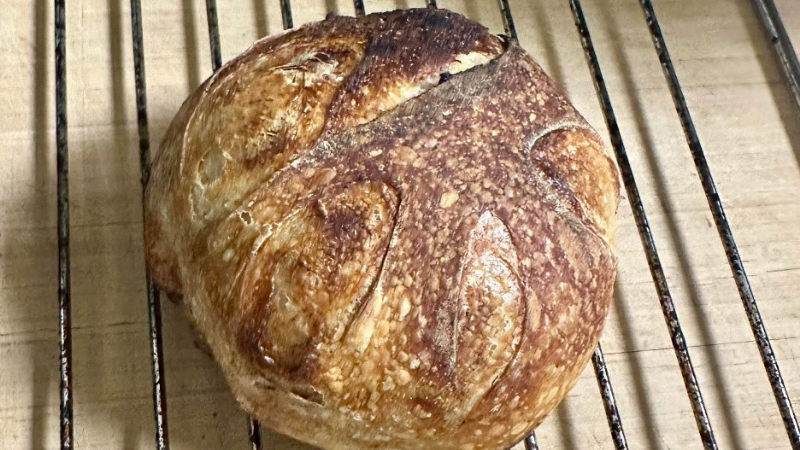
There’s something special about homemade sourdough bread. Beyond the crisp crust and tangy flavor, sourdough also offers some surprising nutritional benefits thanks to the fermentation process.
During a recent class in the Culinary Medicine Kitchen, John Theurer Cancer Center dietician Taylor Carlyle taught patients and guests how to make sourdough from scratch while sharing how fermentation can support digestion and overall health.
Unlike traditional white bread, sourdough fermentation helps break down certain carbohydrates that can be harder to digest. It may also have a lower glycemic impact and can help increase the absorption of important minerals such as iron, zinc and magnesium.
Are you ready to try it yourself? Here’s the recipe Taylor shared with the Culinary Medicine Kitchen class:
Ingredients
- 60g starter
- 350g warm water
- 500g flour
- 9g salt
Instructions for the Dough
- In a large bowl, mix the starter and warm water together. Add flour and salt, stirring until a dough forms and the flour is fully absorbed. Use your hands or a dough scraper as needed.
- Cover the bowl with a damp towel and let it rest for 30 minutes.
- Stretch and fold the dough. Repeat up to 4 times with 30 minutes between each stretch and fold.
- Cover and let the dough rest for 10-12 hours.
- Lightly flour your countertop. Stretch and shape the dough, folding it over itself. This is the time to add any inclusions such as herbs or cheese, if desired.
- Preheat the oven to 450 degrees F.
- Let the dough rest top-side down in a lightly floured bowl for 10-20 minutes.
- Do a final shaping, then place the dough on parchment paper inside a dutch oven. Score the top of the loaf. Add a layer of rice under the parchment paper to help prevent the bottom from burning.
- Bake covered for 30 minutes, then uncovered for 20 minutes or until golden brown.
How to Feed Your Starter
Keep 30g of starter stored in the refrigerator and only feed it when you’re ready to bake.
For 1 Loaf (1:1:1 Ratio)
- 30g starter
- 30g flour
- 30g water
This creates a 90g total starter, leaving 30g to save for next time.
For 2 Loaves (1:2:2 Ratio)
- 30g starter
- 60g flour
- 60g water
This creates a 150g total starter, leaving 30g to save.
Feeding Instructions
- Place your starter on a scale and add the appropriate amounts of flour and water.
- Cover loosely and let rise for 4-8 hours. Warmer temperatures help it rise faster.
- Once the starter has doubled in size and becomes bubbly, it’s ready to use.
- Return the remaining 30g starter to the refrigerator for future baking.
Next Steps & Resources
- Make an appointment online with a dietician near you, or call 800-822-8905.
- Recipe shared by the oncology dieticians at John Theurer Cancer Center
- Register for our Nutrition and Cutting Edge Kitchen Classes
Find a doctor near me
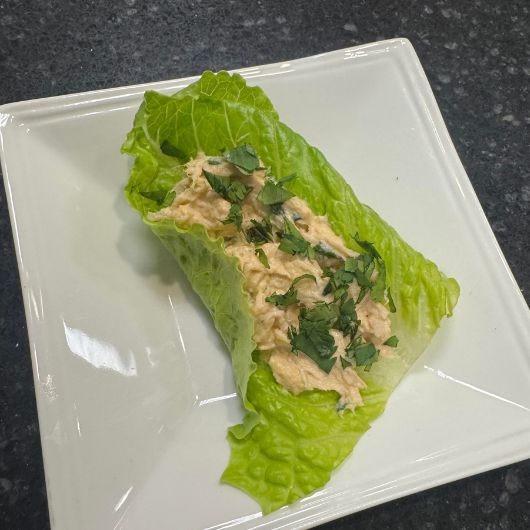
Recipe: Bang, Bang Chicken Salad
With grocery prices soaring, it can be difficult to plan healthy, cost-effective meals. John Theurer Cancer Center dietitian has a few delicious ways to stay nourished on a budget.

Recipe: Sheet Pan Smoky Roasted Chicken Thighs with Cauliflower
Packed with protein, fiber, and flavor, this easy chicken and cauliflower dish is perfect for anyone seeking a healthy, lower-carb meal. Get the recipe.
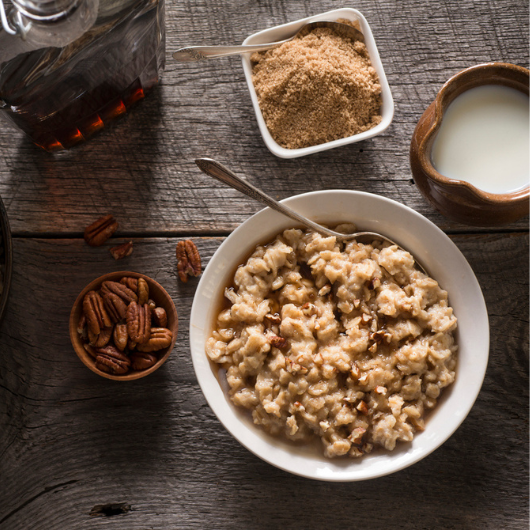
Recipe: Slow Cooker Oatmeal
This one’s a go-to breakfast you’ll actually look forward to — and your future self will thank you for having it ready to go. Try the recipe today.
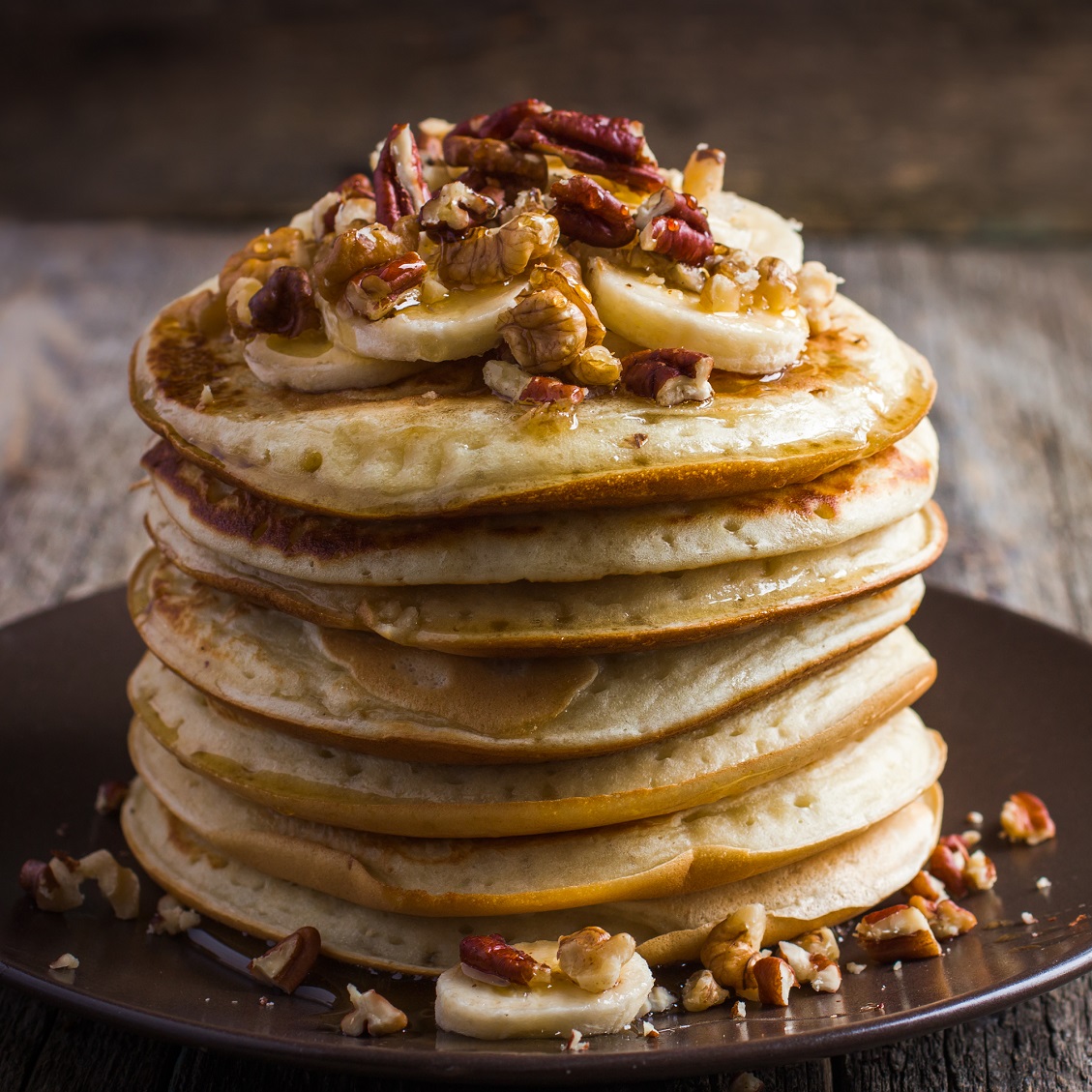
Recipe: Hearty Whole Wheat Pancakes
Enjoy a hearty, healthy breakfast! This whole wheat pancake recipe is easy to make and packed with fiber and nutrients. Get the recipe now.