

Key Takeaways
Advanced robotic microsurgery for lymphedema allows surgeons to create new pathways for fluid to drain, which results in less swelling.
- How it works: During an outpatient procedure, surgeons connect tiny lymph vessels to nearby veins so trapped fluid can drain.
- Benefits: Most people have less swelling and pain, better range of motion and fewer infections.
- Get Care: If you’re interested in lymphedema surgery, schedule a plastic surgery appointment: Book online | 800-822-8905.
Medically reviewed by Richard M. Winters, M.D., Plastic and Reconstructive Surgery, Hackensack University Medical Center.
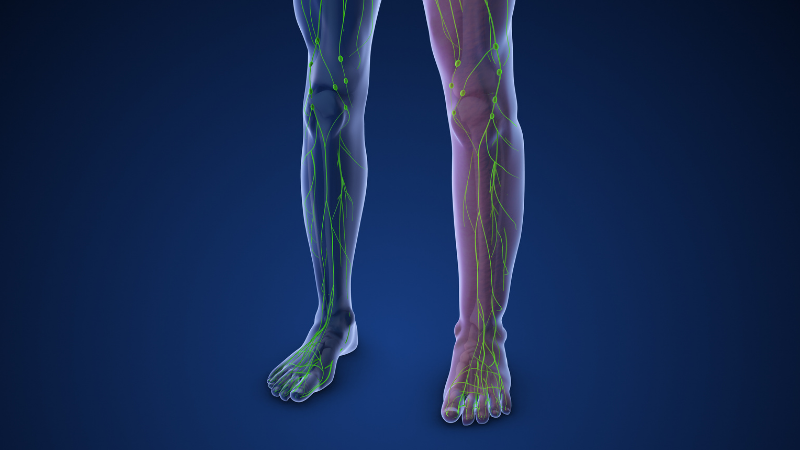
Lymphedema — which occurs when lymph fluid builds up in your arms or legs, often after cancer surgery and radiation — is usually treated with a combination of special massage, exercises, compression and skin care.
These help temporarily, but they take daily effort for the rest of your life, says Richard M. Winters, M.D., chair of the Department of Plastic and Reconstructive Surgery at Hackensack University Medical Center.
A new treatment called advanced robotic microsurgery is giving people with lymphedema another option. It helps surgeons create new pathways for lymph fluid to drain, improving lymphedema symptoms.
Hackensack Meridian Health is one of only seven hospitals in the United States — and the only one in New Jersey — to offer this treatment.
Here’s how it works and how to know if it’s right for you.
What is advanced robotic microsurgery for lymphedema, and how does it work?
This surgery uses a robotic system to help surgeons connect tiny lymph vessels to nearby veins. That creates new pathways for trapped fluid to drain into the bloodstream, where your body clears it. The result can be less swelling and a lower chance of it getting worse.
The robotic system is “simply an extension of the surgeon’s hands,” says Dr. Winters. It filters out hand tremor and scales down every movement, letting surgeons work on vessels thinner than a millimeter.
Unlike compression and massage, it targets the blockage itself, so it’s “more long-lasting and permanent,” says Dr. Winters.
What is the procedure like?
The surgery is done under general anesthesia through a one-inch incision that your surgeon can connect several vessels through, explains Dr. Winters.
“The operation can take anywhere from 45 minutes to an hour and a half,” he says. The timing depends on how many vessels are connected.
It’s an outpatient procedure, so you’ll head home the same day, usually within an hour or two.
As you recover, your care team will likely have you keep using compression garments and drainage massage for a few weeks, says Dr. Winters. Most people see results in that window, and improvements can continue for months.
What are the benefits?
According to Dr. Winters, benefits of this lymphedema treatment include:
- Less swelling
- Reduced pain and heaviness
- Improved range of motion
- Fewer skin infections
Most people report improvements in quality of life, he adds. Some stop wearing compression garments altogether or need them much less often.
Who is a good candidate?
Robotic microsurgery is typically for people with early- or intermediate-stage lymphedema who still have healthy lymph vessels but have symptoms despite compression and massage, says Dr. Winters.
To determine if it’s right for you, your surgeon will review your health history, measure both limbs and use imaging to find where lymph flow is blocked.
It may also help people whose lymphedema followed treatment for melanoma, soft tissue sarcoma, or gynecologic and urologic cancers, he adds.
Anyone with swelling or heaviness since cancer treatment should ask, says Dr. Winters.
“You no longer have to believe that there is no solution available to you,” he adds.
Next Steps & Resources:
- Meet our source: Richard M. Winters, M.D.
- Learn more about advanced robotic microsurgery at Hackensack Meridian Health.
Find a doctor near me

Single-Port Robotic Surgery Makes Complex Surgeries Possible With One Small Incision
Learn how Hackensack Meridian Health surgeons are pioneering a one-incision method to perform complex, life-saving surgeries.

Mom, 34, Credits Urologist — and the ‘Luck of the Irish’ — with Successful Surgical Outcome
On the morning of St. Patrick’s Day 2019, Jessica Davey, a 34-year-old married mother of two from Hillsdale, New Jersey, woke up with severe lower back pain.

Oakland, NJ, Antiques Shipper Gives Back After Head and Neck Cancer
Oakland, NJ resident shares his head and neck cancer journey. Learn about robotic surgery & recovery. Find hope & support.

Cutting-edge Technology
Hackensack Meridian Health is first in the world to partner two innovative technologies to precisely target brain tumors and other brain conditions.