

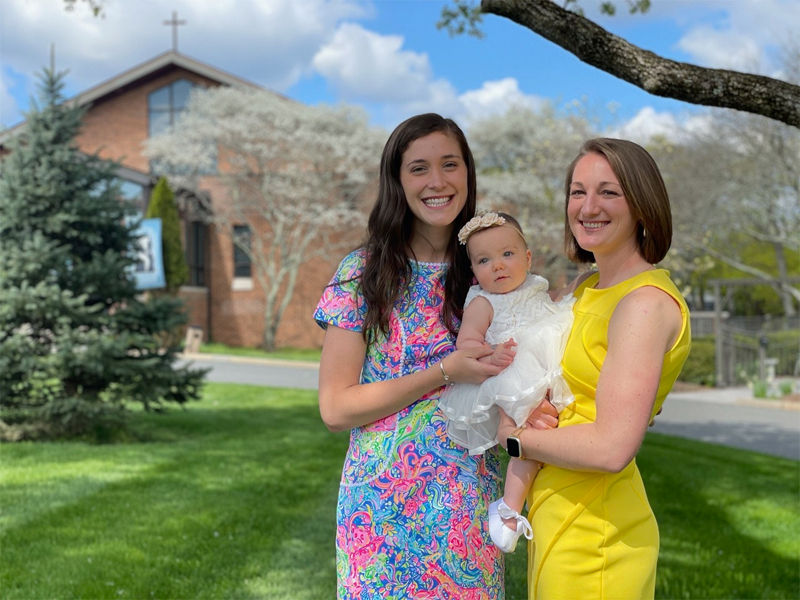
Six weeks before her first baby was due, JulieAnne Butare’s persistent, painful contractions were chalked up to “bad luck” since her body showed no other signs that childbirth was imminent. But all bets were off just days later. In June 2020, JulieAnne’s water broke while the occupational therapist atJFK University Medical Center was on the job helping a patient into his wheelchair.
With JFK’s maternity unit mere steps away, JulieAnne immediately reported the dramatic development to labor and delivery nurses. An exam confirmed JulieAnne was in preterm labor, and the situation quickly escalated as fetal monitoring revealed baby Emma to be in possible distress, her heart rate swinging from high to low.
“I was in full PPE—N95 mask, surgical mask, gown, the works—and pretty much crying behind my mask from the full-blown contractions while I was working with patients,” recalls JulieAnne, 30. “After they realized I was definitely in labor, it was a whirlwind.”
Doctors decided JulieAnne would need an emergency C-section to deliver Emma, who would then be whisked to JFK’s NICU. But first, JulieAnne’s wife, Annmarie, was called to the hospital from the couple’s home an hour away in Lebanon, New Jersey. She arrived just in time to join her spouse in the operating room and greet their new daughter together.
Annmarie, a 2021 medical school graduate about to begin her surgical residency, was nervous about Emma’s prematurity. Doctors told her the baby might not cry right away if her lungs weren’t working properly.
“The umbilical cord had been wrapped around Emma’s neck, but as soon as she got out, she screamed, so her lungs were clearly perfect,” says Annmarie, who has been with JulieAnne since they were college students a decade ago. “Both of us breathed a great sigh of relief.”
A Goal to Feed and Grow
Despite her lusty cry, Emma—weighing just shy of 5 pounds—faced another challenge common to late-preterm infants, born between 34 and 37 weeks of pregnancy.
Emma couldn’t suck properly and quickly ran out of stamina to breast or bottle-feed long enough to take in adequate nutrients. She also had trouble maintaining her body temperature and spent time in a heated isolette.
By Emma’s third day of life, her mothers agreed with doctors’ plans to insert a nasogastric tube through the baby’s nose to funnel nutrients to the stomach. Wanting desperately to breastfeed, the parents devised a plan with clinicians that met everyone’s needs: After short stints of skin-to-skin nursing, Emma received additional breast milk through her nasogastric tube that had been pumped earlier by JulieAnne.
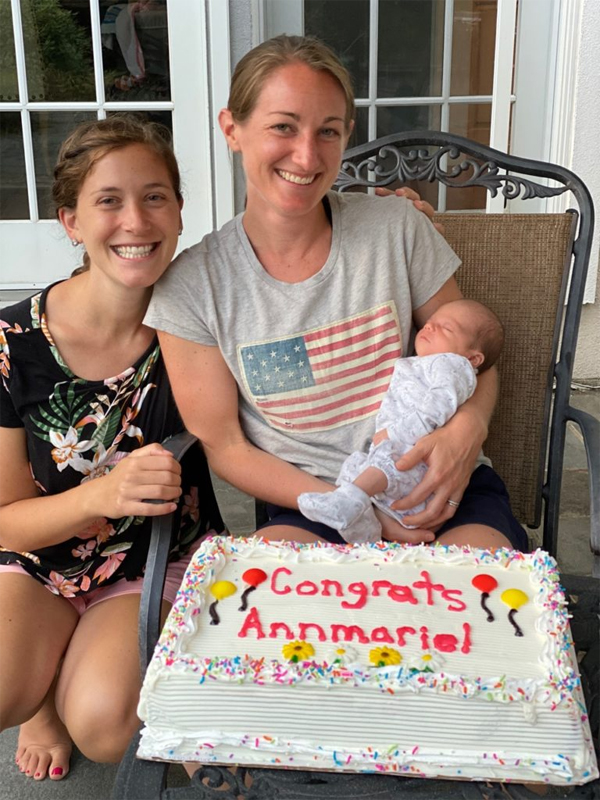
Keeping Families Together
Visiting with Emma in the NICU for eight hours each day after JulieAnne’s discharge, the mothers were overjoyed to provide much of her hands-on care as Emma quickly gained strength. The baby also underwent a day of phototherapy under special lights when she became jaundiced.
“The nurses became like our best friends,” Annmarie recalls. “It was hard going into the hospital every day and not taking Emma home every night, but they made us feel so much better about every aspect of it.”
With its ability to care for preemies as young as 32 weeks of gestation, JFK’s NICU provides reassurance and convenience to parents delivering premature or fragile infants..
Now 10 months old, Emma is a busy, robust 19 pounds and has no lingering health issues. “She’s super-loud, loves to chat and is always on the move,” says JulieAnne.
The family of three is excited to be moving to North Carolina for Annmarie’s surgical residency, taking with them strong memories of Emma’s first weeks in JFK’s patient-centered setting.
“In addition to practicing great medicine, they were the kindest people,” Annmarie says. “They held Emma like she was their own.”
Next Steps & Resources:
- Make an appointment online with a with a maternal fetal medicine specialist, or call 800-822-8905.
- Learn more about maternity care at Hackensack Meridian Health.
Find a doctor near me
Delivering a Baby While COVID-Positive
COVID-positive pregnancy? Learn Maria's story of delivering her baby at Jersey Shore University Medical Center. Find support & resources. Call 800-822-8905.
An Astonishing Baby Delivery
Astonishing Baby Delivery: Rosanna Aguilar's life-threatening pregnancy and successful bloodless surgery at Hackensack. Learn how a skilled team saved her life.
A Head Start at Breastfeeding
Get a head start on breastfeeding. Riverview Medical Center offers expert lactation consultant support to help you and your baby. Call 800-822-8905.
Fighting for Two: COVID-19 and Pregnancy
COVID-19 and Pregnancy: Learn about Donna's experience and innovative treatments at Hackensack University Medical Center. Find support and resources.