

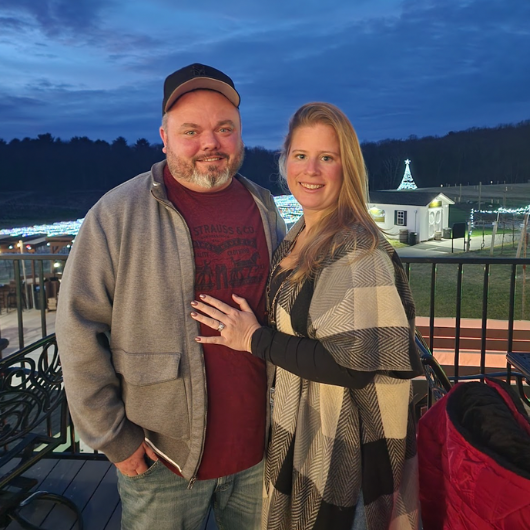
As COVID-19 spread across the U.S., it became clear to Christy Knott, RN, that her excessive weight may cause her serious health issues.
The Westwood, New Jersey, resident was in her early 30s and working as an emergency department assistant nurse manager for a nearby community hospital.
“When the pandemic hit, I had difficulty breathing while wearing the required N-95 mask,” she says. “Not only was I obese, but I was also a borderline diabetic and had borderline high cholesterol. After I caught COVID-19, things got worse and I was hospitalized for seven days.”
During that time, Christy knew she needed to make some changes. “I thought, ‘How am I supposed to inspire people to live a healthy life when I weigh 240 pounds?’” she says.
Finding a Surgical Solution for Weight Loss
Christy worked hard, often meeting with a personal trainer. “I tried to stay active, but my knees didn't appreciate it,” she says. “I wore down all the cartilage in my knees and had three different surgeries to fix them. My joints couldn’t handle the added wear and tear from the extra weight.”
Christy began to research bariatric surgery and met with three different doctors to discuss what she would face. She decided to have gastric sleeve surgery with Sarah Wong, M.D., bariatric surgeon at Pascack Valley Medical Center.
“Dr. Wong was phenomenal,” Christy says. “I was especially pleased with how she explained the procedures to me and my now husband. He is my support system, so knowing that he understood everything was important.”
Christy’s gastric sleeve surgery involved the removal of a large portion of her stomach. Dr. Wong kept the stomach at the same length but with a much slimmer width, like a shirt sleeve. Unlike bypass surgery, no changes were made to Christy’s intestines.
Her surgery was performed with minimally invasive techniques, which meant less pain, shorter recovery and a better outcome.
With a sleeve gastrectomy, approximately 80 percent of the volume of the stomach is removed, including the portion of the stomach that produces most of the hunger hormone. Afterward, sleeve surgery patients will eat much smaller meals and have fewer cravings than before surgery.
New Road to a Healthier Life
Christy’s surgery was successful without any difficulties or surprises, and her journey to a healthier life began slowly:
- Weeks 1–2: During the first two weeks, she could only consume clear liquids, such as water, broth, plain tea and coffee, popsicles, juices without pulp, sodas and sports drinks.
- Weeks 3–4: Two weeks of full liquids followed, such as protein shakes, fruit juices with pulp, plain ice cream, frozen yogurt, sherbet, pudding and strained cream soups with no solids.
- Once liquids could be digested without difficulty: Then, Christy started on two weeks of soft food, such as low-fiber dry or cooked cereals, pasta made with white flour, well-cooked or canned vegetables without seeds or skin, and meats like chicken, turkey, fish and tender cuts of beef and pork.
- After those two weeks: She slowly introduced normal food into her diet, focusing on high protein, low carbohydrate, and low sugar foods.
Christy’s health improved as she restarted exercising with a more normal diet. “Once I began regular sessions with my trainer and eating real food, I felt a lot better,” she says. “My husband, Robert, and I enjoy evening walks to the downtown area. It’s about a mile and a half roundtrip. We also like going to the beach on the Jersey Shore. We are traveling to Jamaica in a few months.”
Since her heaviest weight, Christy has lost 85 pounds and is losing more every month. Her breathing is much better, and she is no longer borderline diabetic or has borderline high cholesterol.
“I owe it all to Dr. Wong and her staff,” Christy says. “Their communication was just great. They were very forthcoming and open with everything that needed to be done before and after surgery. I absolutely recommend them to others considering bariatric surgery.”
She also said she plans to return to Pascack Valley for future health needs. “When my husband and I start a family, I plan on delivering my children there because it's a good community hospital. They make you feel like a member of their family.”
Next Steps & Resources
- Meet our source: Sarah Wong, M.D.
- To make an appointment with Dr. Wong or another bariatric surgeon at Pascack Valley Medical Center, call 877-848-WELL (9355).
- Learn more about bariatric surgery at Pascack Valley Medical Center.
- To make an appointment with a bariatric surgeon near you, call 800-822-8905 or visit our website.
- Thinking of having weight-loss surgery? Take our health risk assessment.

Can Losing Weight Lower Your Blood Pressure?
Lower blood pressure through weight loss? Dr. Reich explains how weight loss impacts blood pressure and offers advice for healthy weight management. Learn more and schedule a consultation.
How to Use Weight-Loss Medication Safely
Use weight-loss medication safely. Dr. Strom offers expert tips for safe use and managing side effects. Learn more and schedule an appointment today.
Weight-loss Journal: Tracking Your Success
Track your weight loss journey. Dr. Ewing shares expert tips and a free tracker to help you achieve your goals. Download now!

Weight Loss Pills: Do They Actually Work?
Weight loss pills: Learn the truth. Dr. Eid explains effectiveness, safety, and the importance of healthy habits for lasting results. Call 800-822-8905 for help.