


You’re scrolling through social media one night when you come across a post about a young boy who received a life-saving kidney transplant. It touches your heart, but it also stirs up questions – and a little fear.
You’d thought about registering as an organ donor before, but something always held you back.
If this scenario sounds familiar, you’re not alone.
5 Common Myths About Organ Donation
Many people consider becoming organ donors but hesitate because of common misunderstandings. If you’ve ever felt unsure about it, let’s get to the bottom of organ donation myths and set the record straight:
Myth #1: Doctors won’t work as hard to save me if I’m a registered donor.
Truth: Saving your life is always the top priority.
Doctors and emergency teams will always put your care first and focus on keeping you alive. Organ donation is never even on the table until every effort to save you has failed and death has been officially declared.
Plus, if organ donation becomes an option, a completely separate team handles that part of your care.
Myth #2: My religion doesn’t support organ donation.
Truth: Most major religions view it as an act of compassion.
Whether you're Christian, Jewish, Muslim, Hindu, Buddhist — or practice another faith — organ donation is widely supported as a way to help others. Not sure where your tradition stands? Talk with a religious leader in your community for clarity and peace of mind.
Myth #3: I’m too old or unhealthy to be a donor.
Truth: Don’t count yourself out.
Age isn’t a disqualifier, and even people with certain medical conditions may be eligible to donate organs or tissues. At the time of death, medical professionals determine which organs, if any, are suitable for donation. You might be able to help more people than you think.
Myth #4: Organ donation will disfigure my body and prevent an open-casket funeral.
Truth: Donations are done with dignity.
Organ and tissue recovery is a surgical procedure performed with great care and respect. Incisions are closed, and an open-casket funeral is still possible afterward.
Myth #5: My family will have to pay for the donation process.
Truth: There’s no cost to the donor’s family.
Organ and tissue donation is covered by the recipient’s insurance or by the organ procurement organization. Your loved ones will never be billed for saying “yes” to saving lives.
The Real Story: Why Organ Donation Matters
“Organ donation is a gift that can transform lives,” says Ciaran Geraghty, administrative director of nursing at Hackensack University Medical Center and a member of the hospital’s Organ Donor Council. “One donor can save up to eight lives and enhance the lives of more than 75 others through tissue donation. By registering as an organ donor, you're offering hope to those waiting for a second chance.”
According to the United Network for Organ Sharing (UNOS), more than 100,000 people in the U.S. are currently waiting for a lifesaving organ transplant – including nearly 4,000 people in New Jersey.
And while the need is great, the opportunity is rare. Less than 1 percent of deaths meet the specific medical criteria for organ donation – usually because organs must be recovered very soon after death, often in a hospital setting. That’s why every new registration matters so much: each one brings more hope to those waiting.
Now that you know the facts, you can feel more confident in deciding to register as a donor. You can make a difference, even after you’re gone.
Next Steps & Resources
- Make an appointment online with a transplant specialist near you, or call 800-822-8905.
- To learn more or register as a donor, visit www.NJSharingNetwork.org.

Heart Transplant Gives Veteran New Lease on Life
Heart transplant gave Joe Johnson a new life. Learn how Jersey Shore University Medical Center's cardiac care helped him. Call 800-822-8905.

Denville Girl Gets New Lease on Life With Kidney Transplant
A new kidney and ongoing, compassionate care from the Hackensack Meridian Children's Health team fuel 8-year-old Zoe Cerna’s quest for a normal life.
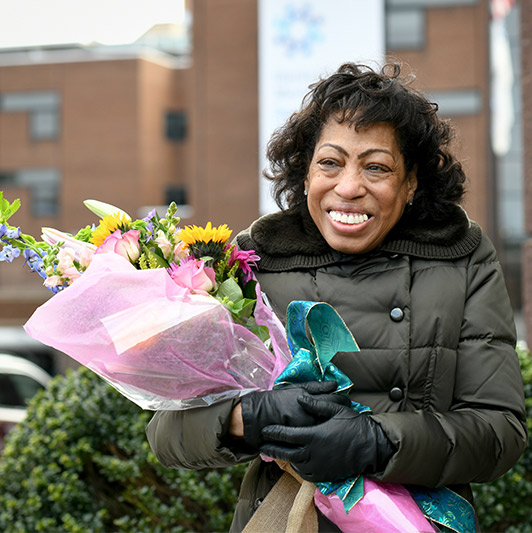
Kidney Recipient Pays It Forward
Two-time kidney transplant recipient Marilyn Moulton makes a gift to support future transplant patients.

6-year-old on Road to Recovery After Bone Marrow Transplant
After Piper Law was diagnosed with a life-threatening disease in which the bone marrow doesn’t make enough blood cells, but doctors give new hope.