

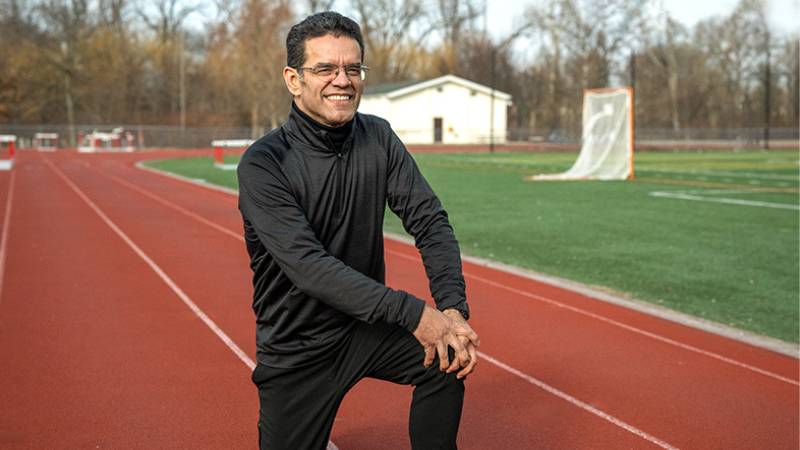
Javier Mattos, a 64-year-old small-business owner from Scotch Plains, New Jersey, has a story many men his age can relate to: He suffered for years from an enlarged prostate and a fear of the risks associated with surgery.
For nearly five years, Javier managed his symptoms with medication alone. His condition gradually worsened until it began affecting his ability to work and have a social life. It even affected his sense of self. “I’m a hands-on guy,” he says. “I run a business. I love to work out. I need to be moving all of the time.” However, he reached a point where none of this was possible because he could barely leave his home and his bathroom.
Enlarged Prostate Symptoms: A Gradual Decline
Javier had always been active and health conscious. He exercised regularly, watched what he ate and stayed fit. That lifestyle, he believes, ultimately played a big part in his recovery. But even the healthiest routines can’t prevent the progression of BPH.
When Javier first started to notice symptoms, they were just inconvenient — like needing to urinate often. Javier was quick to see a urologist, and he was told that he had an enlarged prostate, a common condition in men as they age, known medically as benign prostatic hyperplasia, or BPH. At first, it was manageable with medication rather than surgery. But over time, his symptoms became harder to ignore. The frequent need to pee was disrupting his lifestyle — affecting his ability to work, his exercise routine and his social life.
“At some point, I started to feel pain in my abdomen,” he says. “Then my doctor told me that my prostate was pressing on my kidneys.” That’s when Javier knew that surgery wasn’t something he could keep putting off.
After years of waiting and worrying, he finally made the decision to schedule surgery with the encouragement of his sister, who is also his business partner. “I had been afraid of surgery for a long time,” Javier admits. “You hear stories; you read things online. But my symptoms had taken over my life. I couldn’t keep living that way.”
Finding the Right Urologist for BPH Treatment
Javier’s path to finding the right care wasn’t straightforward. He saw several doctors over the years, but it wasn’t until he met Michael Lasser, M.D., director of Robotic Surgery at JFK University Medical Center in Edison, New Jersey, that he felt he was in the right hands.
From their very first meeting, Dr. Lasser made everything crystal clear. “He told me, ‘Your prostate is twice the normal size, and it’s putting pressure on your kidneys,’” Javier recalls. “He explained my options, including the various types of surgery, and the one that was best for me.”
Dr. Lasser confirms that Javier’s decision to have surgery at this point was wise, as he was taking action before his enlarged prostate could cause permanent damage to his bladder. “When Javier came to me, his prostate had grown very large, about 100 grams, compared to the average size of 20 to 30 grams,” he explains. “He also had a kidney stone, which was a complicating factor. We needed to treat that first and then proceed with robotic prostate surgery.”
Inside the Procedure: How Robotic Surgery Works for BPH
Robotic surgery may sound futuristic, but as Dr. Lasser explains, it is a modern version of traditional surgery that offers more precision and faster recovery times. “Robotic surgery is still performed by a human surgeon,” he says. “The robot is a tool that allows me to make very fine, precise movements through small incisions. That means less pain, less bleeding and a much quicker recovery.”
For Javier, robotic surgery was the right fit. “I wanted something that would allow him to get back to his active lifestyle,” Dr. Lasser says. “With a prostate as large as his, this procedure provided the best chance for a long-term, one-time solution.”
The results were remarkable. Within days, Javier was back at home walking around his house and able to quickly ease back into work. “I was amazed,” he says. “I hadn’t felt that good in years.”
Initial Results: Javier’s Recovery After Enlarged Prostate (BPH) Surgery
Dr. Lasser credits Javier’s quick recovery in part to his lifelong physical fitness and mindset. “The healthier a person is before surgery, the smoother their recovery tends to be,” he says. “Javier came in with good habits. He exercised; he didn’t smoke or drink too much; and he was motivated to get better. That made a real difference.”
For Javier, deciding to have surgery came down to trust. “I didn’t search anything online,” he comments. “I didn’t want to scare myself. I just listened to the doctor. I trusted him completely.” He also credits the hospital team for making the experience positive. “I’d never stayed in a hospital before,” he says. “But everyone at Hackensack Meridian JFK took such good care of me. The nurses were kind and attentive, and they checked on me all night. It was really comforting and reassuring.”
A Return to Normal after BPH Surgery
Just a few months after his procedure, Javier is back at work, jogging again and spending time with his family. He’s even thinking about getting back to his social life and dating. Both Javier and Dr. Lasser mentioned that many men ask about the potential for erectile dysfunction after BPH surgery. Dr. Lasser reassures his patients that the risks these days are very low; only 2 percent to 5 percent. And Javier confirms that this hasn’t been an issue for him, personally.
Dr. Lasser says Javier’s outcome represents the best-case scenario for this type of surgery. “His bladder was still functioning well when he came in, which meant he hadn’t waited too long. If he had delayed much further, his bladder might have stopped contracting properly, which can become a lifelong issue.”
That’s why both doctor and patient share the same advice: Don’t wait too long to seek help. “The sooner we treat it, the better your results will be,” Dr. Lasser emphasizes. Javier agrees. “I know how easy it is to ignore symptoms or to be scared,” he says. “But my advice is simple. Trust your doctor; trust the process. Don’t try to figure it out by yourself on the internet. You can lose valuable time that way.”
Today, Javier is grateful to his entire care team and optimistic about his future. He has his life back, and every day, he’s able to enjoy the simple things he missed for many years.
Next Steps and Urology Resources:
- Meet our source: Michael Lasser, M.D.
- To learn more about enlarged prostate care options near you, call 800-822-8905 or make an appointment online.
- Learn more about New Jersey’s No. 1 ranked urology program at HMH.
The material provided through Healthier You is intended to be used as general information only and should not replace the advice of your physician. Always consult your physician for individual care.
Colon Cancer On the Rise in Young People
Colon Cancer in Young Adults: Dr. Knowles explains the rise and shares prevention tips. Learn more and schedule a consultation today.
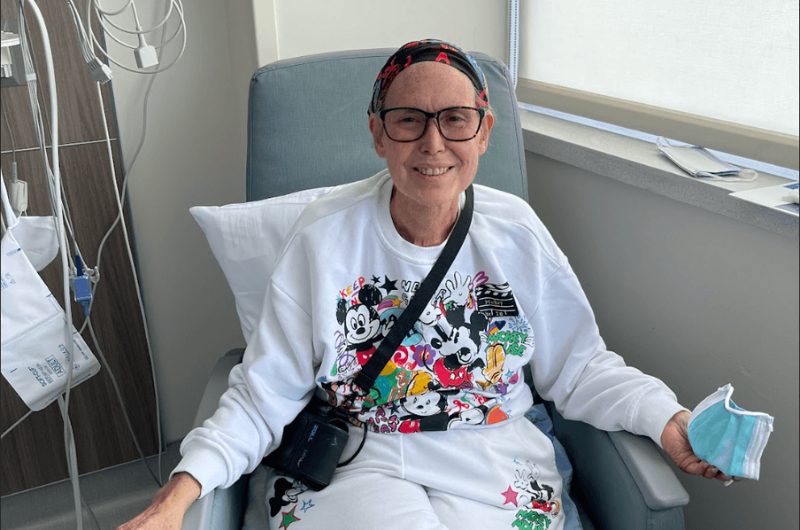
Stem Cell Transplant Gives Medical Assistant “Brand-New” Immune System
Thanks to a combination of high-dose chemotherapy, a stem cell transplant and attentive care, Toni White is in remission from central nervous system lymphoma.
Urology Expertise Saves College Athlete’s Kidney
Urology expertise saved Kali Grayson's kidney. Learn how expert care helped her recover and get back to her life. Call 800-822-8905.

Berkeley Heights Man Spots Testicular Cancer Early
The 28-year-old immediately sought help when he discovered a lump in his left testicle. That decision sent him on the path to quick recovery.