

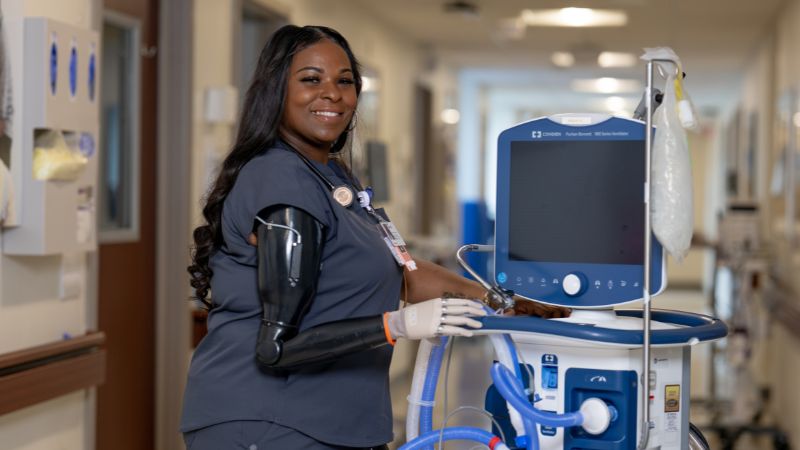
August 22, 2022, is a day that Ciera Coleman will never forget. It was the day she lost her arm in a devastating car accident. “I woke up in the wreckage and instinctively reached for the door, and my arm just wasn’t there,” she says.
Doctors at the hospital where she was taken were unable to reattach her arm, so they performed a complete amputation. At the time, she was in school studying to be a respiratory therapist. Although she only had one semester left, doctors advised her to consider a different career.
“I was told I would need two hands to be a respiratory therapist. I literally hit rock bottom and just spent most of my time trying to hide my amputation,” says Ciera.
However, all that changed when Ciera attended a conference for people with amputations. She was inspired by what her fellow amputees were achieving and decided she wasn’t ready to give up on her dreams.
A friend of Ciera’s recommended she see Ajul Shah, M.D., a board-certified plastic and reconstructive surgeon with Jersey Shore University Medical Center. Dr. Shah has extensive experience in upper-extremity amputee surgery and works closely with his patients throughout rehabilitation and prosthesis fitting through the Limb Loss Clinic.
Discovering Myoelectric Prosthetics
Ciera says that the first time she saw Dr. Shah, she felt at ease. “I finally felt like I had someone who was on my side that could help me,” she said.
In addition to teaching Ciera how to care for her amputated arm, Dr. Shah also listened to Ciera’s goals. He encouraged her to follow her dreams and connected her with resources, including experts who could help her choose the best prosthesis.
After what Ciera describes as a lot of research, she decided she wanted a myoelectric prosthesis, which is an artificial limb controlled by electrical signals generated by the user's own muscles. This type of prosthesis utilizes the latest technology, allowing for the greatest range of motion and control.
Myoelectric prostheses work through electrode sensors placed on the amputated limb. The sensors detect electrical impulses generated by the body when muscles are flexed. Those electric impulses then trigger the nerves to help the prosthetic perform specific actions, such as opening and closing a prosthetic hand.
Myolectric limbs work best when there is remaining muscle function in the residual limb. Dr. Shah determined that Ciera had sufficient muscle function in her limb; however, she would need another surgery to better access the nerves the prosthesis requires to function properly.
Revision Surgery to Optimize the Prosthesis
Ciera says that she was willing to do anything to achieve her dreams of becoming a respiratory therapist, even if it meant going through another surgery. “I knew that my care team had my best interest in mind, so I just put my trust in them,” she says.
Dr. Shah worked closely with Ciera’s prosthetist to determine which nerves were needed to effectively maneuver the prosthesis. “The procedure optimized both the fit and function of the prosthesis,” he says.
The surgery was done as an inpatient procedure and took just a few hours. Dr. Shah says Ciera was a model patient. “She did amazingly in her post-operative recovery. She participated diligently with her post-operative therapy and prosthetic training to the point where she was able to function independently with her myoelectric prosthesis,” he says.
Asking ‘Why Can’t I’
Ciera admits that learning to use her prosthesis was not easy. “Sometimes I felt like it was working against me. I had to work through it and keep a positive attitude,” she says.
After undergoing an amputation, Dr. Shah says it’s common for people to struggle with their mental health. That’s why he encouraged Ciera to consult with the behavioral health team from Hackensack Meridian Health. The psychologists and behavioral specialists worked closely with Dr. Shah, Ciera’s prosthetist and physical therapist, to help her navigate the emotional side of her recovery.
“It was clear that my care team was concerned about my mental health. I’ve never had doctors who cared that much about me. It is awesome. I began to ask myself, ‘Why can’t I? ’”, she said.
Despite what the other doctors had said to Ciera about finishing Respiratory School, Ciera was determined to reach her goals and began asking herself, “Why Can’t I?” Ciera returned to school, graduated in May of 2025, and applied to the hospital she credits that saved her life, physically and mentally: Jersey Shore University Medical Center, and was offered a position as a Respiratory Therapist. Never giving up on her dreams, today she works as a respiratory therapist at Jersey Shore University Medical Center. Her goal is to help normalize amputation and encourage others to follow their dreams. She says her care team, whom she affectionately calls the “Avengers”, has inspired her.
“They are real-life superheroes. They wake up every day and change people’s lives for the better. If people could learn to be as caring as my team, the world would be a better place,” she says.
Next Steps & Resources
- Meet our expert: Ajul Shah, M.D.
- To make an appointment with Dr. Shah or a bariatric surgeon near you, call 800-822-8905.
- Visit our plastic and reconstructive surgery page for more information.
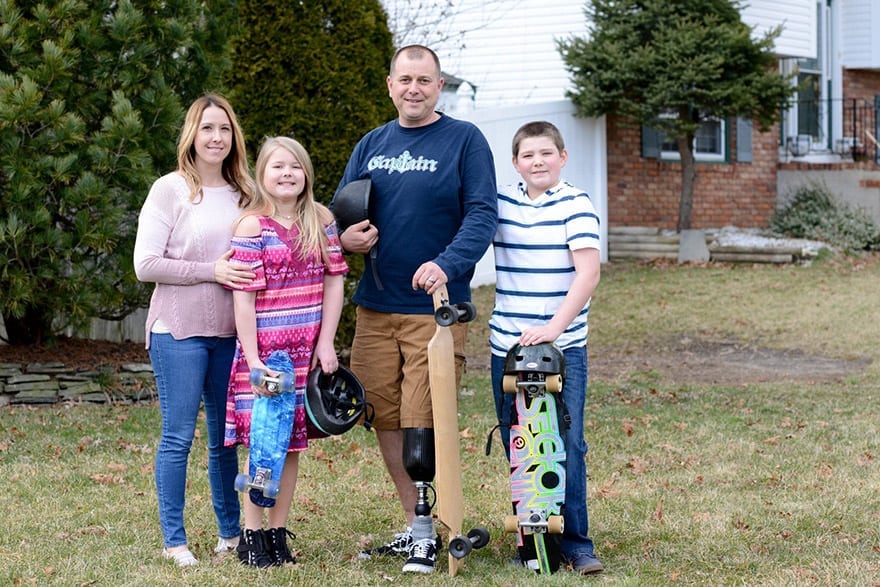
Light at the End of the Tunnel
Toms River man's recovery from a serious accident. Learn how a multidisciplinary team provided support and care, leading to his return to an active life. Find hope and inspiration.
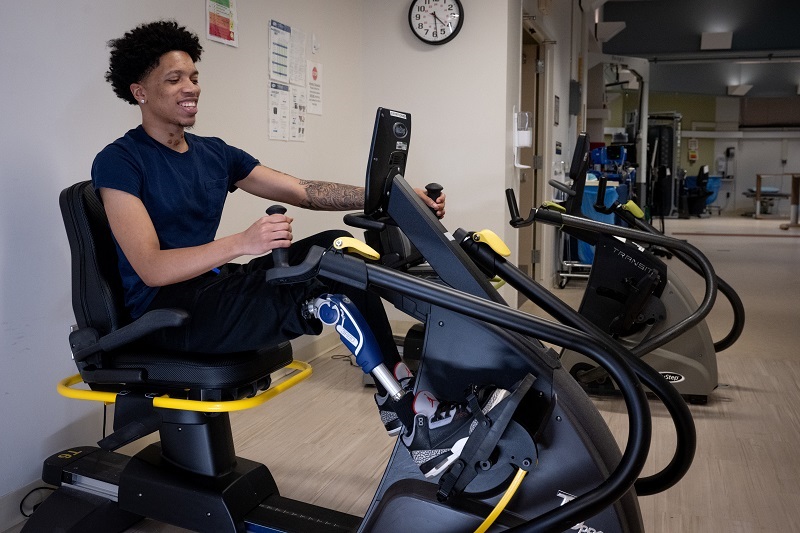
Unique Brain Injury Rehab Program Delivers Recovery ‘Miracle’
JFK Johnson Rehabilitation Institute’s brain injury program helps 19-year-old Malachi Gaddy regain independence after sustaining life-threatening injuries.
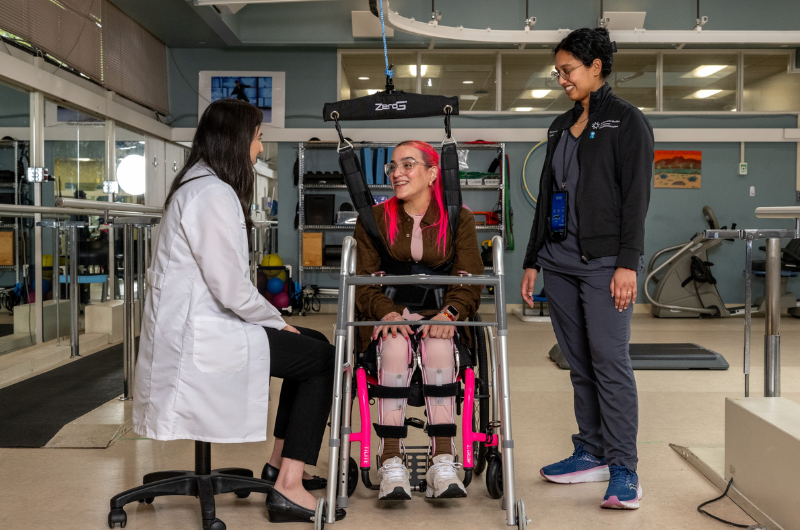
Continuity of Care Helps Woman Regain Strength After Spinal Cord Injury
After a paralyzing spinal cord injury, continuous, personal care from experts at JFK Johnson Rehabilitation Institute got Giannina her independence back.
8 Reasons Your Hands and Feet Might Be Numb
Numb hands and feet? Learn 8 common causes from orthopedic experts. Find relief and treatment options. Call 800-822-8905.