

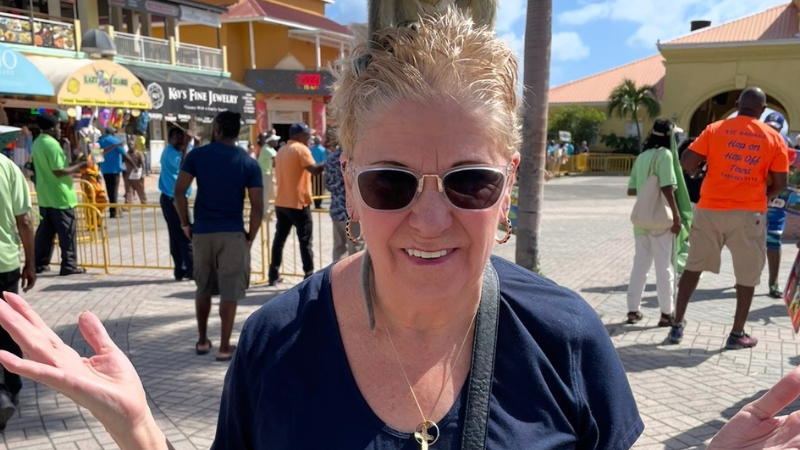
For nearly 50 years, Loisanne Diehl lived with depression. Some days were manageable. Others were overwhelming. But after losing her husband in the 9/11 attacks and cycling through medication after medication with little relief, she reached a point where simply getting out of bed felt impossible.
“I had stopped living,” Loisanne said.
When Depression Doesn’t Respond to Treatment
Loisanne was first diagnosed with depression at 25 years old, though she said the emotional pain started much earlier. Over the decades, she received several diagnoses including major depressive disorder, post-traumatic stress disorder (PTSD) and complicated grief after her husband, who worked in Tower 2 of the World Trade Center, was killed on September 11, 2001.
As the years went on, she tried what felt like everything. Antidepressants. Hospitalizations. Therapy. Medication changes. Nothing brought lasting relief.
“I’ve been suffering from depression for 50 years,” Loisanne said. “I tried 40 or 50 medications. That’s not exaggerating.”
Eventually, her symptoms became so severe that she moved into her daughter’s home because she could no longer care for herself. She stopped showering, withdrew from loved ones and struggled to carry on conversations.
“I felt like I was a fish outside the fishbowl,” she said. “I could see everybody else joining in and getting along, and I felt like I was the outsider.”
At her lowest point, Loisanne experienced intense suicidal thoughts and feared she might act on them.
“I gave my daughter a bottle of pills and said, ‘Please hide these pills because I’m afraid I’m going to swallow them and take my life,’” she recalled.
Somewhere beneath the hopelessness, Loisanne believed there had to be another option. That led her to Nitin J. Pothen, M.D., a psychiatrist at Hackensack Meridian Health.
When she first met Dr. Pothen, the goal wasn’t to simply try another medication. It was to understand why years of treatment had failed and whether a different approach could finally help.
A Diagnosis of Treatment-Resistant Depression
Dr. Pothen explained that Loisanne met the criteria for treatment-resistant depression. “Treatment-resistant depression means the patient has tried at least two different antidepressants without benefit,” Dr. Pothen said. “In Loisanne’s case, she had tried multiple antidepressants without benefit.”
Once that pattern becomes clear, clinicians often begin exploring other evidence-based options beyond traditional oral medications. For Loisanne, she was a candidate for an innovative therapy called Spravato®.
“He said, ‘We have this treatment. It’s a nasal spray and it’s supposed to be very successful for people like yourself,’” Loisanne recalled. “It gave me a glimmer of hope.”
What is Spravato®?
Spravato® (esketamine) is an FDA-approved prescription nasal spray used with an antidepressant or as a monotherapy for adults with treatment-resistant depression or major depressive disorder with suicidal thoughts or behaviors.
Unlike traditional antidepressants, which primarily target serotonin or dopamine, esketamine works differently in the brain.
“It acts on NMDA receptors,” Dr. Pothen explains. “That helps with neuroplasticity, meaning it helps strengthen nerve connections in the brain.”
What Spravato® Treatment is Like
Patients remain in the clinic for about two hours during each treatment session so the care team can monitor them closely. During the first hour, some patients experience temporary dissociation, mild sedation or temporary blood pressure changes as the medication takes effect.
The treatment schedule typically starts with twice-weekly visits, gradually decreasing over time. Loisanne also attended a day program alongside treatment, participating in group therapy five days a week.
About a month after starting Spravato®, she began noticing something she hadn’t felt in years.
“The depression was lifting,” she said.
One small moment especially stayed with her.
“The first thing that I appreciated when I started to come out of the depression was a leaf on a tree,” Loisanne said. “I sat there and looked at the leaf and said, ‘What a beautiful leaf. I’m finally back in the world again.’”
As treatment continued, Loisanne slowly returned to the activities and passions depression had taken from her. She started writing poetry again, reconnecting with people and regaining confidence in herself.
Life After Spravato® Treatment
Today, Loisanne says the treatment gave her something she feared she had lost forever: hope.
“I would not be here today without Spravato®,” she said. “I really believe I wouldn’t have survived.”
After completing treatment, she was able to stop Spravato® for about a year before symptoms slowly returned and she restarted maintenance therapy. Now, she says she feels stable again and hopes to stop treatments soon.
Loisanne has also returned to one of her greatest passions: traveling the world.
Recently, she traveled to Norway and is preparing for a cruise through Germany, Austria and Hungary. She stays active in her community, attends clubs and classes and spends time with family and friends again.
Throughout treatment, Loisanne says the support from the care team at Hackensack made a major difference.
“They’re just so good,” she said. “Everyone knows me there.”
She also found comfort in meditation, something providers encouraged her to practice both during and outside treatment sessions.
Hope Exists, Even After Years of Depression
For people living with treatment-resistant depression, Loisanne’s story is a reminder that new options are available and that healing can still happen, even after decades of struggle.
Dr. Pothen says patients should not lose hope if traditional antidepressants haven’t worked for them.
“With the right treatment plan, many patients improve significantly,” he said.
Loisanne agrees.
“If someone feels hopeless because medications haven’t worked, I would recommend trying Spravato®,” she said. “It gave me my life back.”
If you or someone you love is struggling with severe depression, especially depression that has not improved with standard treatment, speaking with a mental health professional may help open the door to additional options and support.
Next Steps & Resources
- Meet our source: Nitin J Pothen, M.D.
- Make an appointment online with a psychiatrist near you, or call 800-822-8905.
- Learn more about behavioral health at Hackensack Meridian Health.

Coping With Stress When World Events Feel Overwhelming
Trauma can affect our mental health even when experienced secondhand through the news. A psychiatrist offers tips to cope.

Electroconvulsive Therapy Provides Hope for Treatment-Resistant Depression
Electroconvulsive therapy is a first-line therapy for treatment-resistant depression. Learn how experts at Hackensack Meridian Health use it to improve lives.

How Mental Health and Addiction Are Connected
Understand mental health and addiction's connection. Learn how treatment helps. Dr. Mahato offers expert insights. Find support today.

By the Numbers: It’s Time to Take a Mental Break
Prioritize mental wellness. Learn simple relaxation techniques and find helpful resources. Improve your mental health today. Call 800-822-8905.