
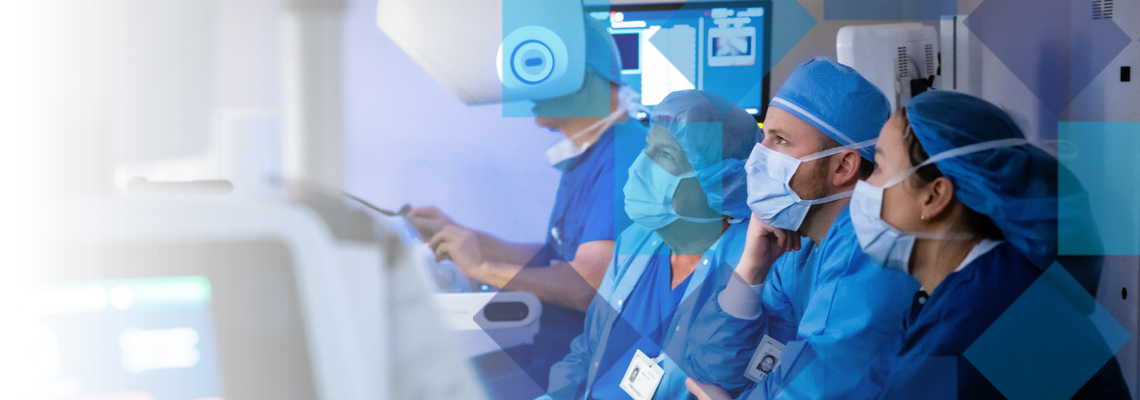
Advanced Robotic Microsurgery for Lymphedema in New Jersey
Lymphedema, chronic swelling of the arms and legs, is a common and uncomfortable side effect of many cancer treatments. Traditionally, physical therapy and compression sleeves and/or garments have been the recommended treatment. Hackensack Meridian Health now offers groundbreaking robotic microsurgery as an additional option for treating and preventing lymphedema.
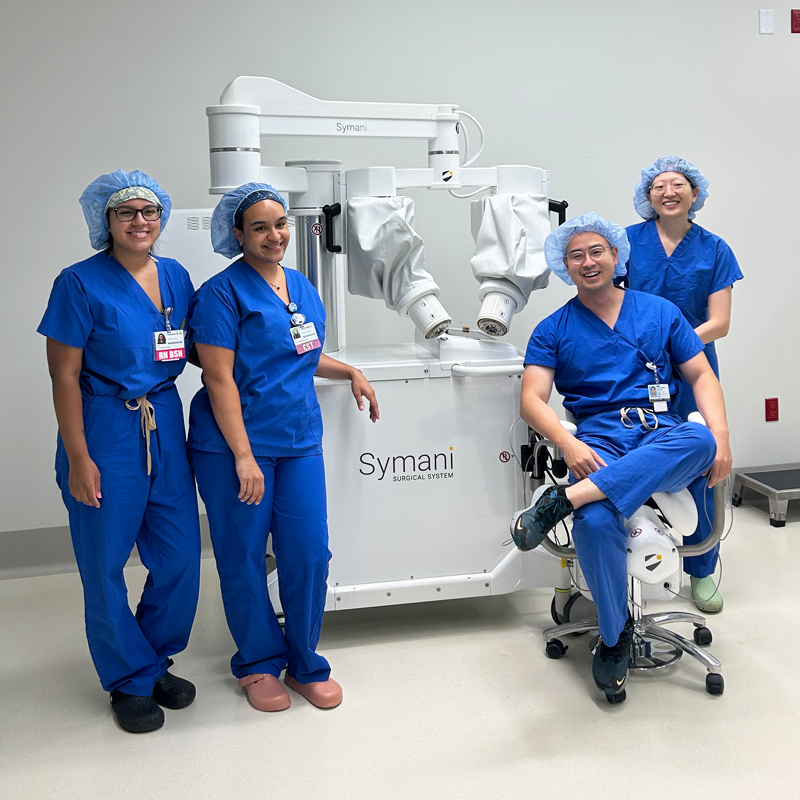
The advanced robotic microsurgery platform enables surgeons to perform complex procedures, such as reconnecting small blood vessels and nerves, with extreme accuracy. HMH is one of only seven hospitals in the United States and the only hospital in New Jersey to use this groundbreaking robotic platform for microsurgery.
Before undergoing robotic microsurgery for lymphedema, our surgeons will create a personalized treatment plan based on your health history, the severity of your condition, and your previous treatments. Your comprehensive plan may include specialized physical therapy and other treatment options in addition to surgery.

Find a Lymphedema Surgeon
Search our network of surgeons to make an appointment.
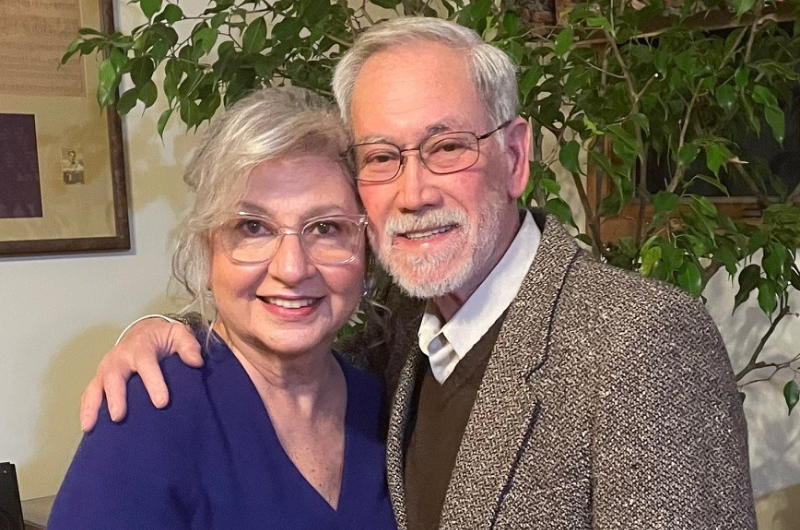
Transforming Life After Breast Cancer
For nearly 30 years, Nora Ambros lived with a painful reminder of her first battle with breast cancer.
How Robotic Microsurgery Works
Microsurgery is performed with a robotic tool that acts as an extension of the surgeon's hands and eyes. During the procedure, surgeons use controllers to move the robotic arms, allowing for precise movements when connecting and tying off blood vessels, lymphatic ducts, and nerves.
Benefits of Robotic Microsurgery
Robotic microsurgery offers many of the same benefits as traditional robotic surgery. Procedures performed using robotic microsurgery have a quicker recovery time, less bleeding, and a lower chance of complications and can be done through less invasive incisions. Some other benefits include:
- Tremor cancellation: The robotic platform eliminates the surgeon’s natural hand tremor, enhancing their precision.
- Scaling and control: Surgeons can scale their hand movements with robotic microsurgery, meaning even the smallest movements can be precise and controlled.
- Better outcomes: Individuals who undergo robotic microsurgery experience improved results and a lower likelihood of requiring revision surgery.
Robotic Microsurgery for Lymphedema
Lymphedema occurs when there is an excessive accumulation of lymph fluid between the skin and deeper tissues in a specific area of the body. The buildup of that lymph fluid causes swelling, typically in the arms and legs, which can lead to discomfort, loss of function and infection.
Treating lymphedema surgically is a delicate process. It involves rerouting the body’s lymphatic drainage system by connecting tiny lymphatic vessels, with sutures as thin as a human hair, to nearby veins.
HMH surgeons utilize the robotic microsurgery platform to perform incredibly precise surgeries, moving and connecting microscopic vessels with a level of accuracy that was once impossible, using stitches that are finer than a strand of silk.
Those who have robotic microsurgery for lymphedema experience:
- Reduced swelling
- Better movement to perform daily tasks
- Less fluid buildup, which leads to fewer infections
Other Procedures Done With Robotic Microsurgery
Breast Reconstruction
Robotic microsurgery is used to perform certain types of breast reconstruction. During the procedure, surgeons take tissue from the abdomen and elsewhere to reconstruct the breast. The robot enables surgeons to completely detach and reattach the tissue and its blood supply, resulting in superior recovery and outcomes.
Limb Salvaging and Reconstruction
In some cases, surgeons can use robotic microsurgery to save a limb that may otherwise need to be amputated. The robotic platform is also used for reconstructing head and neck defects after cancer surgery.
Frequently Asked Questions
Patient Resources

Single-Port Robotic Surgery Makes Complex Surgeries Possible With One Small Incision
Learn how Hackensack Meridian Health surgeons are pioneering a one-incision method to perform complex, life-saving surgeries.
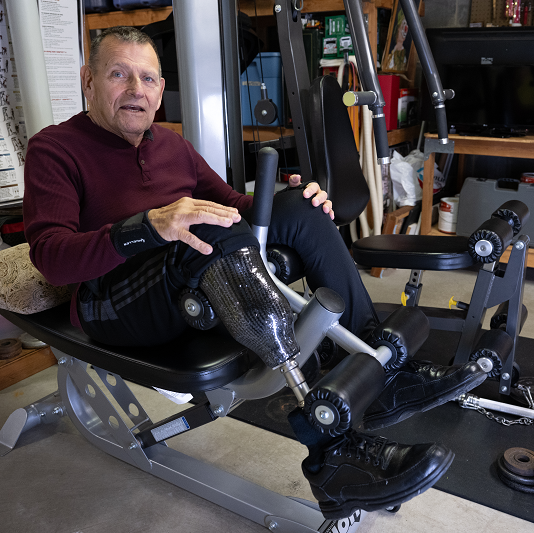
Amputation and Chemotherapy Save Life of 80-year-old Man
Bill Tarallo underwent a leg amputation while also receiving treatment for chronic lymphocytic leukemia at Hackensack University Medical Center.
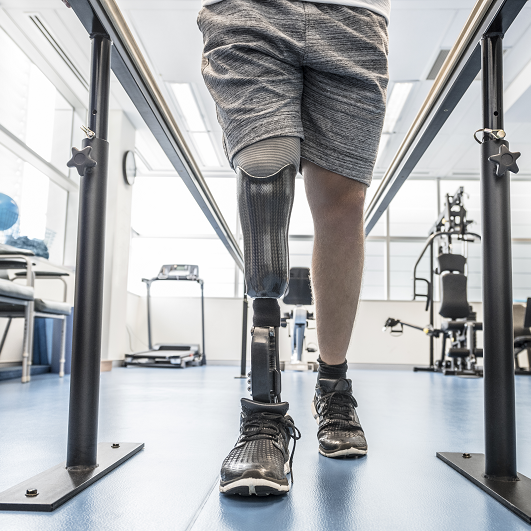
Life After Amputation: What You Should Know
Life After Amputation: Learn about recovery, pain management, and adapting to a fulfilling life. JFK Johnson Rehabilitation Institute offers support. Call 800-822-8905.
Hackensack Meridian Hackensack University Medical Center Brings World-Class Robotic Precision Home to New Jersey
Hackensack Meridian Hackensack University Medical Center has just become the first hospital in New Jersey to acquire and use the Symani® Surgical System from MMI, a robotic microsurgery platform, and a revolutionary tool that is transforming the future of healing.